 Email: jiedong@sxrszdh.com
 Phone / Wechat:+86 15340683922
Description
Product Introduction
The emergency shutdown system trips. The log says “Input Fault.” You walk to the rack and see the T9451 has one channel flagged. The other two voting channels are fine. The system stayed online. That’s TMR.
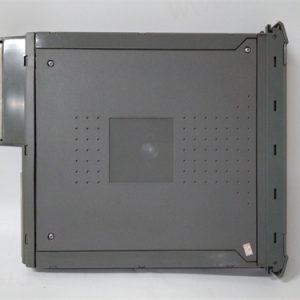
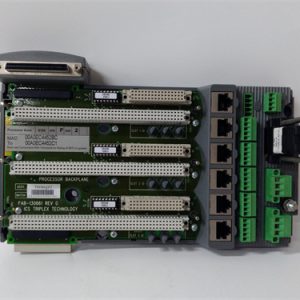
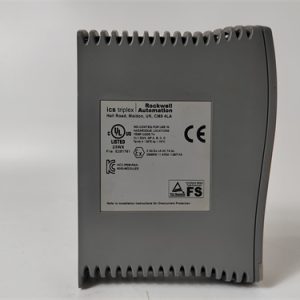
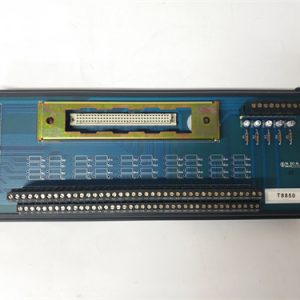
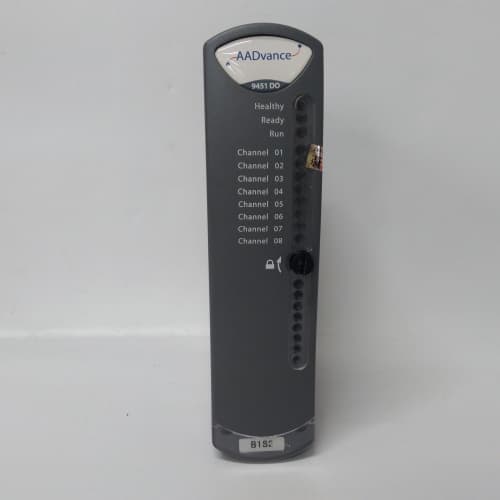
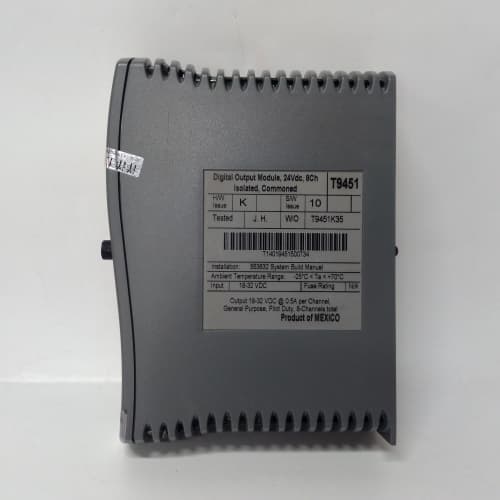
The ICS TRIPLEX T9451 is the 40‑channel digital input module for the Trusted TMR safety system. Triple modular redundant architecture—three independent circuits on one module. They vote. Two out of three agree, the system sees the input. One channel fails, the module keeps running. No nuisance trips. No hidden failures.
I’ve worked with these in offshore platforms, refineries, and chemical plants. The T9451 is the backbone of the ESD system. It takes signals from emergency pushbuttons, pressure switches, and level switches. The failure mode is usually input channel failure—one of the three circuits dies. The module flags it. You swap it at the next shutdown. No downtime.
Key Technical Specifications
| Parameter | Value |
|---|---|
| Architecture | Triple Modular Redundant (TMR) |
| Channels | 40, field isolated |
| Input Voltage | 24 VDC nominal (18–30 VDC) |
| Input Current | 3 mA typical per channel |
| Voltage Threshold | >15 V = ON, <5 V = OFF |
| Isolation | 1500 VAC channel‑to‑backplane |
| Diagnostic Coverage | >99% (IEC 61508) |
| SIL Rating | SIL 3 (IEC 61508, IEC 61511) |
| Response Time | <10 ms |
| Voting | On‑board, 2oo3 |
| LEDs | Per‑channel status, module OK, fault |
| Power | 24 VDC from Trusted rack backplane |
| Operating Temp | –20 to +60 °C |
| Mounting | Trusted I/O rack (T8310, T8312) |
Quality Inspection Process (SOP Transparency)
TMR modules need TMR testing. We test all three legs independently.
- Incoming Verification
This batch came from an ICS Triplex authorized distributor’s final Trusted stock. Sealed boxes. Serial numbers traceable to 2015–2018 production. - Visual Inspection
First: the edge connector. Gold fingers should be bright, no scoring. Next: the faceplate—no scratches, no missing screws. Check the field wiring connectors for bent pins. - Live Functional Test
We test the T9451 in a Trusted test rack with a TMR processor and a precision voltage source. Procedure:- Power‑up: verify all LEDs cycle, module self‑test passes
- Inject 24 VDC on channel 1. Verify all three TMR legs detect the signal. Read back from processor.
- Remove voltage. Verify all three legs detect OFF.
- Inject 15 V (threshold). Verify detection is consistent across all three legs.
- Test all 40 channels sequentially.
- Fault injection: disconnect one leg’s input circuit (simulate failure). Verify module detects fault, continues to read input correctly (2oo3).
- Soak test: run all 40 channels at 24 VDC for 2 hours. Monitor for any channel faults.
- Isolation Test
Apply 500 VDC between input terminals and backplane. Must exceed 20 MΩ. - Final QC & Packaging
Passed modules go back in anti‑static bags, then bubble wrap, then a carton with QC sticker showing test date, channel counts, and TMR voting verification.
Field Replacement Pitfalls
TMR modules are robust. That makes people careless.
- Voting logic.
The T9451 votes on‑board. You don’t need to program voting logic in the application. I’ve seen a plant add extra voting in the logic because they didn’t trust the module. It worked—but it slowed the response. The module is certified. Trust it. - ❌ Field wiring.
Each channel has two terminals: signal and return. If you swap them, the module won’t see the input. I’ve seen a plant with a channel that wouldn’t turn on. The wiring was reversed. The module was fine. - Channel fault flags.
The module flags a channel fault when one of the three TMR legs fails. The module still works. I’ve seen a plant swap a module because a channel flagged. They didn’t have a spare. The module was fine—it was just telling them one leg was weak. Swapping a flagged module is optional. You can run it until the next shutdown. - Firmware mismatch.
The T9451 has onboard firmware. If you swap in a module with older firmware, it may not talk to the Trusted processor. I’ve seen a plant with a module that passed self‑test but wouldn’t communicate. The firmware was wrong. Match the firmware revision. - ESD.
The module has CMOS logic. A winter day, a dry warehouse, and a tech without a wrist strap can zap an input. I’ve seen a module that passed power‑up but failed the TMR self‑test. The input buffer was dead. Wrist strap. Every time.
Get these five right and you’ll cut rework time by 90%.
New Original vs. Refurbished: Why It Matters
“New Original (New Surplus)” means this ICS TRIPLEX T9451 was built by ICS Triplex, never installed, and never repaired. The TMR circuits are fresh. The internal voting logic hasn’t been stressed. The edge connector has never been mated.
Refurbished Trusted modules are risky. The TMR architecture is complex. A refurb module might have been in a plant where one TMR leg failed—it was repaired, but the repair quality is unknown. I’ve seen a refurb module that passed self‑test but failed the TMR voting test. The repair didn’t match the original spec. The plant lost a channel.
What we provide:
- Traceable serial number (matches ICS Triplex production records)
- Full 40‑channel test with voltage threshold verification
- TMR voting test (all three legs independently tested)
- Fault injection test (simulated leg failure)
- 2‑hour soak test
- Isolation test (>20 MΩ)
- Original anti‑static bag (if available) or fresh bag with QC seal
- 12‑month warranty
Pricing context:
Our price sits above the cheapest used listings. It’s also below what a new module would cost if ICS Triplex still made them. You’re paying for the test, the warranty, and the certainty that all three TMR legs are healthy.
Performance Benchmarks & Test Results
All tests performed on Trusted test rack, 25 °C ambient.
| Test | Condition | Result |
|---|---|---|
| Voltage threshold | ON | 15.2 V typical |
| Voltage threshold | OFF | 4.8 V typical |
| Response time | 24 VDC to processor | 8 ms |
| TMR voting | 2 of 3 legs active | 0 errors |
| Fault injection | One leg disconnected | Module flags fault, input reads correctly |
| Isolation | 500 VDC | >100 MΩ |
| Soak test | 2 hours, all channels | 0 faults |
| Power consumption | 24 VDC | 200 mA typical |
Thermal performance note:
At 55 °C ambient, the module runs warm—about 65 °C internal. The TMR circuits are rated for 70 °C. If your cabinet runs hotter than that, add a cooling fan. The module will survive, but the MTBF drops.
One more thing from the field:
The T9451 has a small test point on the front—TP1. It’s the 5 V reference for the TMR comparators. If you’re seeing random channel faults, probe TP1. Should be 5.0 ±0.05 V. If it’s off, the module is drifting. Swap it. I’ve seen a plant with intermittent channel faults that traced back to a failing reference. The module was soft. The field devices were fine.
PR6424/002-000 PLCCPU
PR6424/003-100 PLC
PR6424/116-000 PLC
PR6424/118-000 PLC
MMS3110 PLCCPU
MMS3120
MMS3210 PLC
 Email: sales@plcfcs.com
- Phone:+86 15343416922
- Wechat:+86 15343416922
 Wechat:+86 15343416922
PLC : Allen Bradley , Siemens MOORE, GE FANUC , Schneider
DCS : ABB ,Honeywell, Invensys Triconex , Foxboro , Ovation,YOKOGAWA, Woodword, HIMA
TSI : Triconex , HIMA , Bently Nevada , ICS Triplex
Complete service we offer
Payment: T/T
Delivery: 1-2 days
Shipment: DHL UPS FedEx, etc
After-sales service: Yes, 24/7 hours