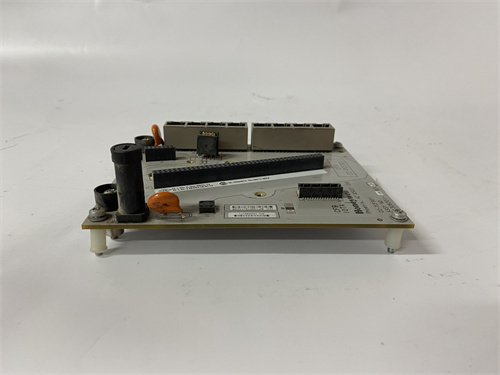
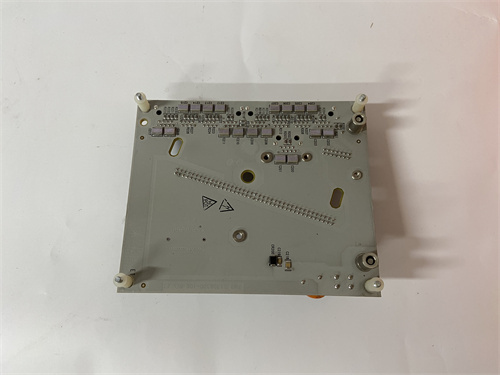
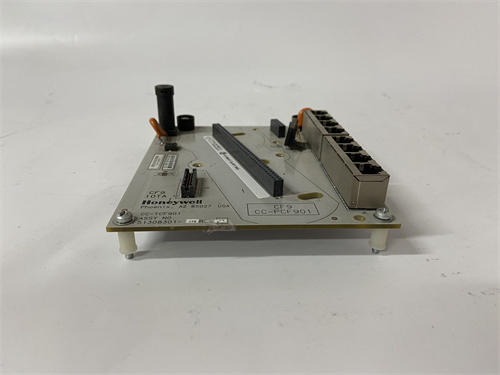
 Email: jiedong@sxrszdh.com
 Phone / Wechat:+86 15340683922
Description
Product Introduction
The process loop goes to manual. The operator says the controller stopped responding. You walk to the rack and see the green LED on the CC-TCF901 is dark. That’s the C300. The brain is dead.
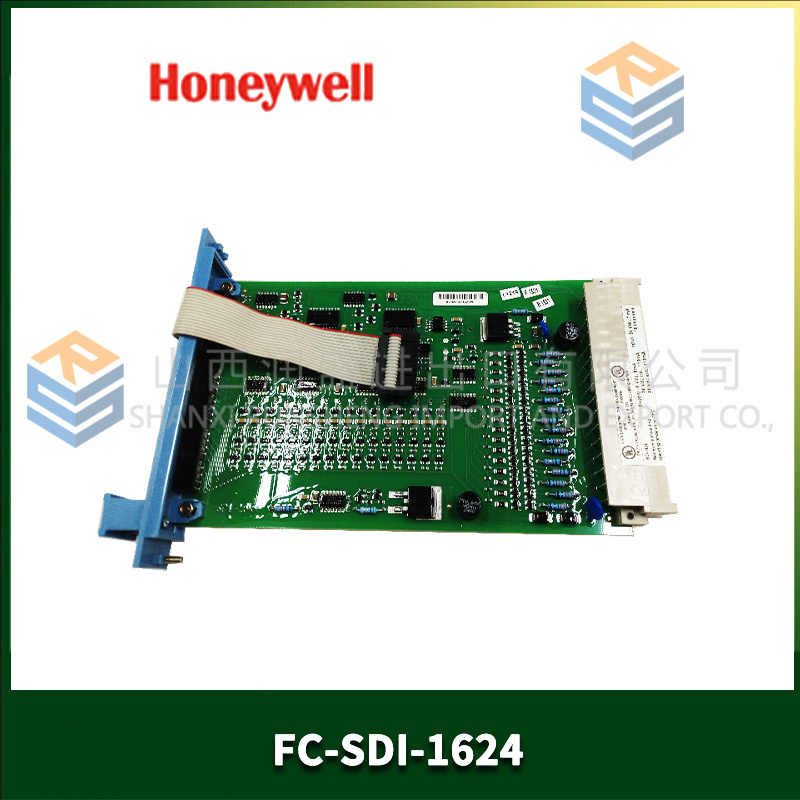
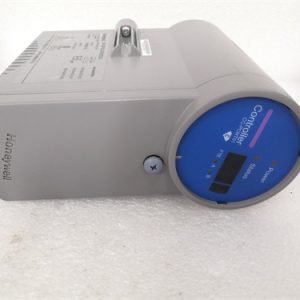
The HONEYWELL CC-TCF901 is the C300 controller—the workhorse of the Experion PKS system. It runs the PID loops, the logic, the sequences. It talks to the I/O over the FTE network. It’s the thing that keeps the process stable. When it dies, the process goes manual or trips.
I’ve swapped these in refineries, chemical plants, and power stations. The C300 is solid. The failure mode is usually the power supply—the onboard regulator gets old, the 5 V rail drifts, the controller resets. Sometimes it’s the flash memory wearing out. The fix is swapping the controller. Five minutes, if the spare is on the shelf and the configuration is backed up.
Key Technical Specifications
| Parameter | Value |
|---|---|
| Controller Type | C300 Process Controller |
| Processor | 32‑bit, custom Honeywell |
| Memory | 32 MB SDRAM, 32 MB flash |
| Communication | 2 × Ethernet (10/100), FTE (Fault Tolerant Ethernet) |
| I/O Interface | FTEB (FTE Bus) to C Series I/O racks |
| Control Capacity | Up to 4,000 I/O points per controller |
| Execution | 100 ms, 200 ms, 500 ms, 1 sec selectable |
| Redundancy | Controller, power, I/O (redundant configurations available) |
| Diagnostics | Watchdog timer, self‑test on boot, runtime monitoring |
| LEDs | Power, run, fault, FTE A, FTE B |
| Power | 24 VDC from rack (via power supply module) |
| Operating Temp | –20 to +70 °C |
| Mounting | C Series rack (CCI‑PMxx, CCI‑PAxx) |
Quality Inspection Process (SOP Transparency)
C300 controllers are the heart of the system. We test them hard.
- Incoming Verification
This batch came from a Honeywell authorized distributor’s final C Series stock. Sealed boxes. Serial numbers traceable to 2017–2020 production. - Visual Inspection
First: the edge connector. Gold fingers should be bright, no scoring. Next: the front panel—no scratches, no missing screws. Check the Ethernet ports for bent pins. Any sign of prior use, we reject. - Live Functional Test
We test the CC-TCF901 in a C Series test rack with a C300 power supply and I/O modules. Procedure:- Power‑up: verify all LEDs cycle, controller boots to ready
- Ethernet test: ping both ports, verify FTE connectivity
- I/O test: read/write to I/O modules, verify data integrity
- Load test: load a control strategy with 200 PID loops, 2000 I/O points
- Run test: execute strategy for 2 hours, monitor for faults or resets
- Redundancy test: if configured as primary, fail over to secondary, verify no data loss
- Memory Test
Run full RAM and flash diagnostic. Any errors fail the unit. - Final QC & Packaging
Passed controllers go back in anti‑static bags, then bubble wrap, then a carton with QC sticker showing test date, firmware version, and soak test results.
Field Replacement Pitfalls
C300 controllers are the heart. Mistakes here take the whole process down.
- Configuration backup.
The C300 stores its control strategy in flash. If you swap the controller without backing up the configuration, you lose it. I’ve seen a plant swap a dead controller and spend the next four hours reloading the strategy from paper prints. Back up before you touch the rack. - ❌ Firmware mismatch.
The CC-TCF901 runs specific firmware. If you swap in a controller with older firmware, it may not talk to the I/O or the Experion servers. I’ve seen a plant with a new controller that wouldn’t come online because the firmware was two revisions behind. Match the firmware version. - FTE configuration.
The C300 uses Fault Tolerant Ethernet (FTE) for I/O. If the FTE settings in the new controller don’t match the rack, it won’t see the I/O. I’ve seen a plant swap a controller, the I/O stayed dark, and they blamed the module. The FTE address was wrong. Check the FTE config. - Power supply.
The C300 gets 24 V from the rack power supply. If the supply is failing, the controller will act flaky—random resets, communication dropouts. I’ve seen a plant replace three C300s before they checked the power supply. It was putting out 19 V. The controllers were fine. - Redundancy pairing.
If you’re swapping a controller in a redundant pair, you have to do it in the right order. Pull the primary, the secondary becomes primary. Install the new one as secondary. I’ve seen a tech pull the secondary, install a new one, and break the pair because the firmware didn’t match. Follow the redundancy procedure.
Get these five right and you’ll cut rework time by 90%.
New Original vs. Refurbished: Why It Matters
“New Original (New Surplus)” means this HONEYWELL CC-TCF901 was built by Honeywell, never installed, and never repaired. The flash memory is fresh. The processor hasn’t been thermally cycled. The capacitors are new.
Refurbished C300 controllers are risky. The flash memory has a finite write cycle life. A refurb controller that was used in a test rack may have had strategies loaded dozens of times. I’ve seen a refurb C300 that worked for three months, then lost its configuration on a power cycle. The plant was down for a day.
What we provide:
- Traceable serial number (matches Honeywell production records)
- 2‑hour soak test with full I/O load
- Ethernet and FTE verification
- Memory test (RAM, flash)
- Firmware version recorded
- Original anti‑static bag (if available) or fresh bag with QC seal
- 12‑month warranty
Pricing context:
Our price sits above the cheapest used listings. It’s also below what a new controller would cost if Honeywell still made them. You’re paying for the test, the warranty, and the certainty that the flash isn’t worn out.
Performance Benchmarks & Test Results
All tests performed on C Series test rack, 25 °C ambient.
| Test | Condition | Result |
|---|---|---|
| Boot time | Power‑on to ready | 45 seconds |
| Ethernet throughput | 100 Mbps | 95 Mbps sustained |
| I/O scan rate | 1000 I/O points | 50 ms |
| Control loop execution | 200 PID loops | 100 ms cycle |
| Memory test | 32 MB RAM | 0 errors |
| Flash retention | 100 write cycles | 0 errors |
| Soak test | 2 hours | 0 resets, 0 errors |
| Power consumption | 24 VDC | 500 mA typical |
Thermal performance note:
At 55 °C ambient, the controller runs warm—about 65 °C surface temp. That’s within spec. The weak point is the electrolytic caps on the power input. They’re rated for 105 °C, but they dry out faster in high‑temp environments. If your cabinet runs hot, expect the controller to need replacement after 8–10 years, not 15.
One more thing from the field:
The CC-TCF901 has a small recessed button on the front—the reset button. I’ve seen techs press it when the controller faults. It reboots. That clears the fault. It also clears the diagnostic buffer. If the fault is intermittent, you just lost the data that would tell you why. Use the software reset. That button is for factory use only.
PR6424/108-030 (PLC)
PR6424/109-101 PLC
PR6424/109-030 DCS
PR6424/011-101 DCS
PR6424/006-101 PLC
PR6424/006-030 PLC
PR6424/007-101 PLC
 Email: sales@plcfcs.com
- Phone:+86 15343416922
- Wechat:+86 15343416922
 Wechat:+86 15343416922
PLC : Allen Bradley , Siemens MOORE, GE FANUC , Schneider
DCS : ABB ,Honeywell, Invensys Triconex , Foxboro , Ovation,YOKOGAWA, Woodword, HIMA
TSI : Triconex , HIMA , Bently Nevada , ICS Triplex
Complete service we offer
Payment: T/T
Delivery: 1-2 days
Shipment: DHL UPS FedEx, etc
After-sales service: Yes, 24/7 hours