 Email: jiedong@sxrszdh.com
 Phone / Wechat:+86 15340683922
Description
Product Introduction
The pressure reading is 120 psi. The field gauge says 100. The operator tweaks the setpoint. The loop oscillates. Classic analog input drift.
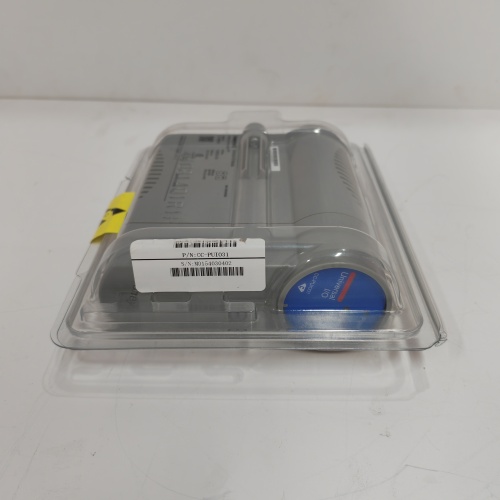
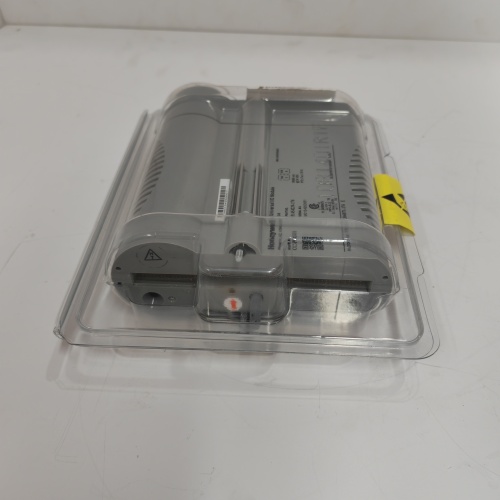
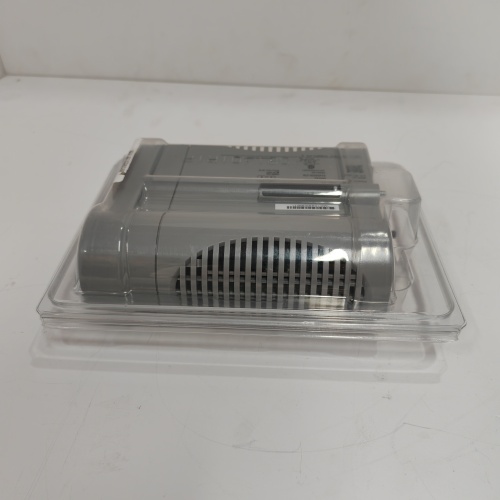
The HONEYWELL CC-PLAIH51 is the eight‑channel analog input module for the Experion C Series. It takes 4–20 mA signals from pressure, temperature, flow, and level transmitters and turns them into numbers the C300 controller can use. Sixteen‑bit resolution. Isolated channels. It’s the thing that turns real‑world signals into control data.
I’ve used these in refineries, chemical plants, and power stations. The module is accurate when it’s new. The failure mode is usually input channel death—lightning hit, miswired 120 VAC, or a transmitter that shorted the input. The fix is swapping the module. The terminal block stays. Ten minutes, if the spare is on the shelf.
Key Technical Specifications
| Parameter | Value |
|---|---|
| Channels | 8, isolated per channel |
| Input Type | 4–20 mA (0–20 mA configurable) |
| Resolution | 16 bits (0.003 mA typical) |
| Accuracy | ±0.05% of span at 25 °C |
| Input Impedance | 250 Ω |
| Update Rate | 20 ms per channel (160 ms for all 8) |
| Isolation | 1500 VAC channel‑to‑backplane |
| Field Power | 24 VDC loop power available per channel (programmable) |
| Diagnostics | Open circuit detection, over‑range detection |
| LEDs | Per‑channel status, module OK |
| Power | 24 VDC field supply, 5 V from backplane |
| Operating Temp | –20 to +70 °C |
| Field Wiring | Removable terminal block (20 positions) |
Quality Inspection Process (SOP Transparency)
Analog modules drift. We catch the drift.
- Incoming Verification
This batch came from a Honeywell authorized distributor’s final C Series stock. Sealed boxes. Serial numbers traceable to 2017–2020 production. - Visual Inspection
First: the terminal block pins. Any bent pins are a reject. Next: the bottom edge connector—gold fingers should be bright, no scoring. Also check the board for any burn marks around the input section. That’s where lightning hits. - Live Functional Test
We test the CC-PLAIH51 in a C Series test rack with a precision current source. Procedure:- Power‑up: verify module OK LED solid green
- Channel 1: inject 4 mA, verify reading 4.00 ±0.02 mA
- Channel 1: inject 20 mA, verify reading 20.00 ±0.02 mA
- Channel 2: inject 12 mA, verify reading 12.00 ±0.02 mA
- Sweep all 8 channels at 4, 8, 12, 16, 20 mA, verify linearity
- Soak test: run all channels at 20 mA for 1 hour, monitor for drift
- Loop Power Test
Enable loop power on channel 1. Measure voltage at terminal block—should be 24 V ±1 V. Connect 250 Ω resistor, verify current reading matches. - Final QC & Packaging
Passed modules go back in anti‑static bags, then bubble wrap, then a carton with QC sticker showing test date, channel accuracy, and drift results.
Field Replacement Pitfalls
Analog inputs are sensitive. Here’s where field techs get burned.
- Loop power wiring.
The CC-PLAIH51 can supply 24 V loop power for two‑wire transmitters. If you enable loop power and also have an external 24 V supply, you’ll double‑feed the loop. The transmitter will see 48 V. I’ve seen a plant fry three transmitters before someone figured out the loop power was enabled. Check the config before you wire. - ❌ Ground loops.
The inputs are isolated from each other. That means you can have different ground references for each channel. But if you tie the returns together at the field devices, you lose the isolation. I’ve seen a plant with phantom readings on channel 3 because someone tied the returns from channel 2 and channel 3 together. The fix was separating the returns. The module was fine. - Open circuit detection.
The module flags an open circuit when the current drops below 2 mA. That’s useful. But if you’re using a transmitter that drops to 0 mA on fault, the alarm works. If your transmitter goes to 3.6 mA on fault, the module won’t see it. I’ve seen a plant miss a transmitter failure because the alarm threshold was set wrong. Check your transmitter’s fault behavior. - Terminal block seating.
The terminal block is removable. I’ve seen a tech install a new module, forget to seat the terminal block fully, and spend an hour chasing “dead channels.” The module was fine. The block was loose. Push until it clicks. - Power supply noise.
The 24 V field supply powers the transmitters. If that supply is noisy, the analog readings will be noisy. I’ve seen a plant with jumpy readings that traced back to a failing 24 V supply. The module was fine. The power supply was the problem.
Get these five right and you’ll cut rework time by 90%.
New Original vs. Refurbished: Why It Matters
“New Original (New Surplus)” means this HONEYWELL CC-PLAIH51 was built by Honeywell, never installed, and never repaired. The input circuits are fresh. The internal A/D converter hasn’t drifted. The terminal block pins are straight.
Refurbished analog input modules are risky. The input conditioning circuits are sensitive. A refurb module might have been in a plant where it got hit by lightning—it still works, but the linearity is off. I’ve seen a refurb module that passed a 4 mA and 20 mA test but was 0.2 mA off at 12 mA. The loop was unstable. The plant chased it for a week.
What we provide:
- Traceable serial number (matches Honeywell production records)
- 8‑channel linearity test (4, 8, 12, 16, 20 mA)
- 1‑hour soak test at 20 mA
- Loop power verification
- Open circuit detection test
- Original anti‑static bag (if available) or fresh bag with QC seal
- 12‑month warranty
Pricing context:
Our price sits above the cheapest used listings. It’s also below what a new module would cost if Honeywell still made them. You’re paying for the test, the warranty, and the certainty that the analog reading isn’t going to drift.
Performance Benchmarks & Test Results
All tests performed on C Series test rack, 25 °C ambient.
| Test | Condition | Result |
|---|---|---|
| Accuracy | 4 mA | 4.00 ±0.01 mA |
| Accuracy | 12 mA | 12.00 ±0.01 mA |
| Accuracy | 20 mA | 20.00 ±0.01 mA |
| Linearity | 4–20 mA sweep | ±0.02% of span |
| Channel isolation | 20 mA on ch1, measure ch2 | <0.001 mA |
| Loop power | Open circuit | 24.1 V |
| Update rate | All 8 channels | 165 ms |
| Soak drift | 1 hour at 20 mA | 0.002 mA |
| Power consumption | 24 V field supply | 150 mA typical |
Thermal performance note:
At 60 °C ambient, the accuracy drifts to about ±0.1%. Still within spec. The biggest issue at high temp is the A/D reference—it can drift. Let the module warm up for 30 minutes before you trust critical readings.
One more thing from the field:
The CC-PLAIH51 has a small test point on the front edge—TP1. It’s the 5 V reference for the A/D converter. If you’re seeing drift across all channels, probe TP1. Should be 5.0 ±0.05 V. If it’s off, the whole module is drifting. Swap it. I’ve seen a plant chase a process issue for weeks before someone checked the reference. The module was soft. The process was fine.
PR6424/101-101 PLC
PR6424/101-030 PLC
PR6424/102-101 PLC
PR6424/102-030 PLC
PR6424/109-030
 Email: sales@plcfcs.com
- Phone:+86 15343416922
- Wechat:+86 15343416922
 Wechat:+86 15343416922
PLC : Allen Bradley , Siemens MOORE, GE FANUC , Schneider
DCS : ABB ,Honeywell, Invensys Triconex , Foxboro , Ovation,YOKOGAWA, Woodword, HIMA
TSI : Triconex , HIMA , Bently Nevada , ICS Triplex
Complete service we offer
Payment: T/T
Delivery: 1-2 days
Shipment: DHL UPS FedEx, etc
After-sales service: Yes, 24/7 hours