 Email: jiedong@sxrszdh.com
 Phone / Wechat:+86 15340683922
Description
Product Description
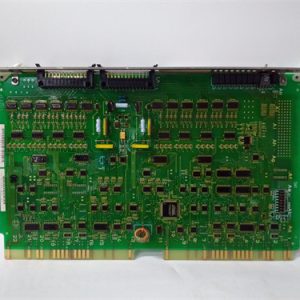
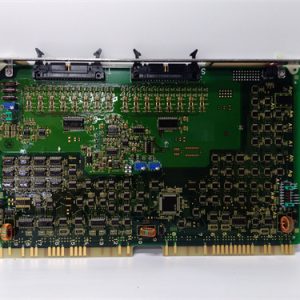
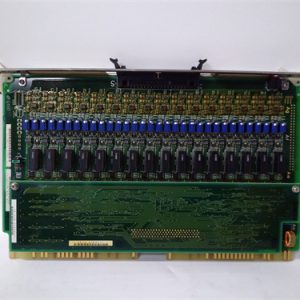
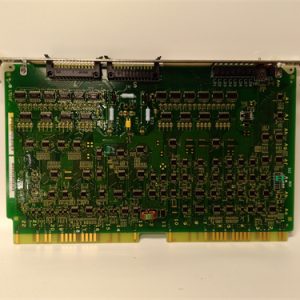
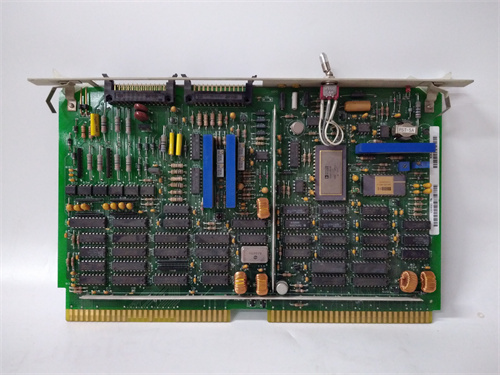
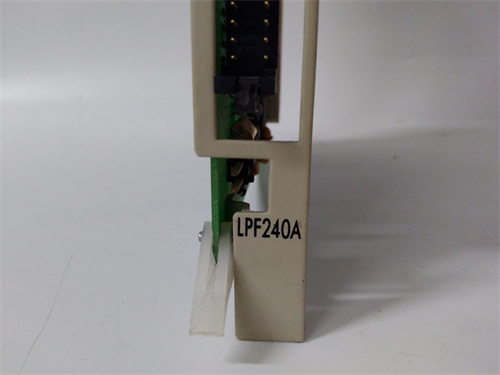
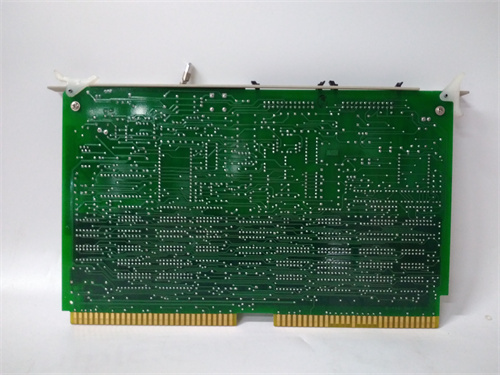
The HITACHI LPA210A is a compact, micro-sized Programmable Logic Controller (PLC) from Hitachi’s LP series, designed for small to medium-scale automation and control applications. This all-in-one unit integrates the central processing unit (CPU), power supply, digital inputs/outputs (I/O), and communication ports into a single, space-saving device. The primary function of the HITACHI LPA210A is to execute user-programmed logic to automate machine sequences, process control, and equipment monitoring in standalone or networked environments. It serves as an economical and efficient control center for machines where a full-sized modular PLC system is not required. By implementing the HITACHI LPA210A, equipment builders and system integrators can achieve reliable automation with a simplified wiring and programming structure, making it ideal for cost-sensitive projects without compromising on core control capabilities.
Technical Parameters and Features
- Device Type: Micro PLC (Compact, All-in-One Unit).
- I/O Configuration: The “A” suffix typically indicates a fixed I/O count model. The LPA210A likely provides a specific combination of built-in digital inputs and outputs (e.g., 12 inputs / 8 outputs). The exact count should be verified in the datasheet.
- I/O Type: Digital inputs are typically 24V DC sink/source type. Digital outputs are often relay type (allowing switching of AC or DC loads) or transistor type (for DC-only, higher-speed switching).
- Programming: Programmed using Hitachi’s proprietary programming software (e.g., Hitech MicroWorks or a similar suite), which supports ladder logic, the standard language for PLCs.
- Memory: Contains user memory for storing the control program and data registers for variables and timers/counters.
- Communication Ports: Typically includes at least one RS-232 or RS-485 serial port for programming, connecting to HMIs, or simple network communication (often supporting Modbus RTU protocol).
- Power Supply: The unit includes an integrated power supply, accepting a specific AC or DC input voltage range (e.g., 100-240V AC).
- Expansion Capability: Many micro PLCs like the LPA210A offer the option to connect one or more compact I/O expansion modules to increase the number of available points.
- Mounting: Designed for DIN-rail mounting (35mm).
Advantages and Key Features
- Compact and Cost-Effective: The integrated design of the HITACHI LPA210A minimizes footprint and reduces the total component cost compared to a modular PLC system, making it an excellent value proposition for simpler machines.
- Simple Installation and Wiring: With built-in I/O and power supply, installation is straightforward. Terminal blocks are clearly marked, reducing wiring time and potential errors.
- Adequate for a Wide Range of Applications: Provides sufficient I/O points, program memory, and instruction set for controlling a vast array of small machines such as packaging units, small conveyors, palletizers, and test stands.
- Reliable Performance: Hitachi’s industrial components are known for durability. The LPA210A is built to operate reliably in typical industrial environments with electrical noise and temperature variations.
- Easy to Learn and Program: Using standard ladder logic and Hitachi’s software, technicians and engineers with basic PLC knowledge can quickly develop and troubleshoot applications for this controller.
Application Case Studies in Various Fields
- Small Packaging Machine: Controls the sequential operation of a vertical form-fill-seal (VFFS) bagger, managing the film feed, product dosing, sealing jaws, and cutting mechanism using its built-in I/O.
- Industrial Washer/Dryer: Automates the cycle of a commercial parts washer, controlling solenoid valves for water/chemical injection, a heater, a pump motor, and timers for each stage.
- Conveyor Sorting System: Used as a local controller for a short conveyor section with a diverting arm. It reads photo-eye sensors and controls the solenoid for the arm based on signals from a master system received via its serial port (Modbus).
- HVAC Equipment Control: Manages the staging of fans, pumps, and damper actuators in a small air handling unit or rooftop package based on thermostat and pressure switch inputs.
Comparison with Competing Products
When compared to other micro PLCs (e.g., Siemens LOGO!, Mitsubishi FX series, Allen-Bradley Micro800) or using relay-based control, the HITACHI LPA210A holds its position in the market:
- Simplicity vs. Flexibility: The LPA210A offers a simple, fixed I/O solution. This is easier to specify and install than a modular micro-PLC but offers less flexibility for customization or future expansion compared to a base-unit-plus-modules approach from competitors.
- Cost vs. Brand Recognition: Hitachi PLCs often compete aggressively on price. The LPA210A may offer a lower entry cost than equivalent units from larger global automation brands, though it may have less brand recognition in some regions and a smaller ecosystem of third-party accessories and training.
- Relay Outputs vs. Transistor Outputs: If the model has relay outputs (common in these units), it can directly switch AC loads, which is a key advantage over transistor-output units. However, relay outputs have a limited switching life compared to solid-state outputs.
Selection Advice and Important Notes
- Verify Exact I/O Count and Type: Before selection, confirm the precise number of inputs and outputs, and whether outputs are relay or transistor type. Relay outputs are versatile but wear out; transistor outputs are long-lasting but only for DC.
- Check Software Availability: Ensure you have access to the correct, compatible version of Hitachi’s programming software for the LPA210A. The software license and programming cable are necessary for development.
- Consider Future Expansion Needs: If there is any possibility the machine will need more I/O in the future, verify that the LPA210A supports expansion modules and factor their cost and availability into your decision.
- Understand Communication Limits: The built-in serial port is suitable for basic connectivity. If advanced networking (Ethernet/IP, PROFINET) or connection to complex HMIs is required, a different PLC model with built-in Ethernet or a communication module option should be considered.
- Plan for Spare Parts: For critical equipment, consider purchasing a spare HITACHI LPA210A unit. Its all-in-one nature means a single component failure (like the power supply) requires replacing the entire controller.
3HNE00188-1
AAI141-H00
ADV561-P00 PLC
ALR121-S00RS422/485 PLC
ALF111-S00
IS215UCVEH2A IO
BRC410
 Email: sales@plcfcs.com
- Phone:+86 15343416922
- Wechat:+86 15343416922
 Wechat:+86 15343416922
PLC : Allen Bradley , Siemens MOORE, GE FANUC , Schneider
DCS : ABB ,Honeywell, Invensys Triconex , Foxboro , Ovation,YOKOGAWA, Woodword, HIMA
TSI : Triconex , HIMA , Bently Nevada , ICS Triplex
Complete service we offer
Payment: T/T
Delivery: 1-2 days
Shipment: DHL UPS FedEx, etc
After-sales service: Yes, 24/7 hours