 Email: jiedong@sxrszdh.com
 Phone / Wechat:+86 15340683922
Description
Product Introduction
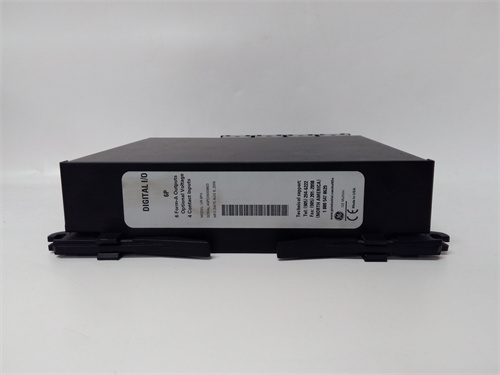
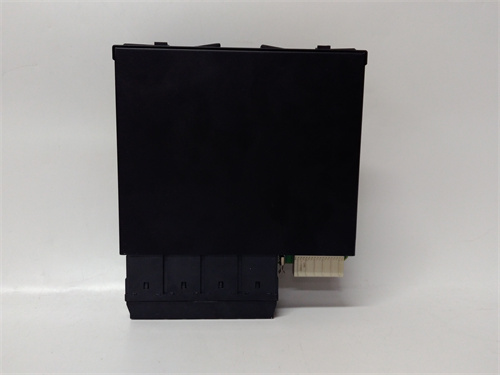
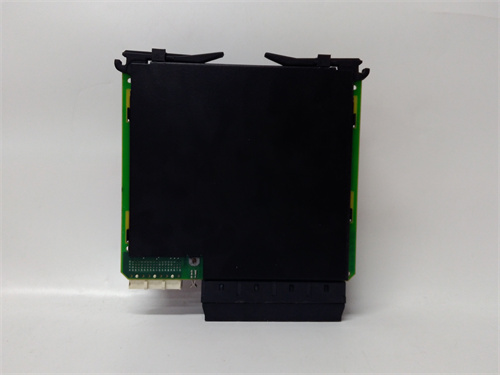
The UR series from GE Multilin is everywhere in substations—protection relays for feeders, transformers, generators. But none of them work without the UR6PH. It’s the power supply module that slides into the leftmost slot of the UR chassis and turns station battery voltage into clean, regulated power for the rest of the relay.
The UR6PH comes in different input voltage variants. The “6P” is the family; the “H” typically indicates the higher voltage range—90-300 V DC, common in utility substations with 125 V DC battery systems. There’s also a “L” version for 24/48 V DC. Both are hot-swappable, meaning you can pull and replace them without taking the relay offline—critical in protection schemes where downtime isn’t an option. They also provide status contacts for SCADA, so the control center knows if the power supply fails before the relay does.
Key Technical Specifications
| Parameter | Specification |
|---|---|
| Part Number | UR6PH (check variant for voltage range) |
| Brand | GE Multilin |
| Series | UR (Universal Relay) |
| Type | Power Supply Module |
| Input Voltage (H variant) | 90-300 V DC (typical for 125 V DC station batteries) |
| Input Voltage (L variant) | 20-60 V DC (typical for 24/48 V DC systems) |
| Output Voltages | +5 V, ±15 V (internal to chassis), isolated |
| Power Rating | Typically 50 W continuous |
| Hot-Swappable | Yes, with no interruption to relay operation |
| Status Outputs | Form C contacts for power supply healthy/fail |
| Indicators | OK LED (green), Fail LED (red) |
| Mounting | Plugs into UR chassis slot 1 (leftmost) |
| Cooling | Convection (no fan) |
| Condition | New Original (New Surplus) |
Quality Inspection Process (SOP Transparency)
Incoming verification starts with the part number and variant. UR6PH alone isn’t enough—we need to know whether it’s the H (high voltage) or L (low voltage) version. Verified against OEM packing slip and module label. Serial number logged.
Visual inspection:
- Case Condition: Inspected for dents, cracks, or damage. The metal case should be straight—bent cases can indicate internal damage or previous impact.
- Front Panel: LEDs checked for clarity. Ejector/retainer levers inspected for proper operation—they should move smoothly and latch securely.
- Connectors: Backplane connector inspected for bent pins or corrosion. Gold fingers should be pristine on new surplus.
- Status Contacts: Terminal block for status outputs checked for bent pins.
- Label Integrity: Verify all labels present, including GE logo, input voltage rating, and serial number.
Live functional test requires a UR chassis with backplane and load (or another UR module to provide load).
- Power-Up: Insert module into slot 1. Apply input voltage (125 V DC for H variant, 48 V DC for L variant). Verify green “OK” LED illuminates steady. Red “Fail” LED remains off.
- Voltage Verification: Measure backplane voltages at test points (if available) or at adjacent module power pins:
- +5 V: 5.02 V ±0.1 V
- +15 V: 15.1 V ±0.3 V
- -15 V: -15.0 V ±0.3 V
- Load Test: Install typical UR module (e.g., UR8LH) in slot 2. Verify module powers up and communicates.
- Measure total current draw from input supply: should match expected load.
- Ripple Measurement: Using oscilloscope (AC-coupled), measure ripple on +5 V rail under load:
- < 50 mV p-p typical, < 100 mV p-p acceptable.
- Status Contact Test: Connect ohmmeter to status contacts.
- Normal operation: “Power Supply Healthy” contact closed, “Fail” contact open.
- Remove input power: verify contacts change state within 1 second.
- Hot-Swap Test: With system running and second UR module installed, remove UR6PH. Verify adjacent module loses power immediately (as expected). Reinsert, verify module reboots and operates correctly.
- Input Range Test (H variant): Vary input from 90 V to 300 V DC. Verify output voltages remain within spec.
- Isolation Test: Megger input to chassis at 500 V DC. Minimum acceptable: >10 MΩ. New units typically >100 MΩ.
- Thermal Run: 4-hour continuous operation at typical load. Monitor case temperature via IR thermometer. Should stabilize below 55°C at 25°C ambient.
Final QC: Module sealed in anti-static bag with desiccant, QC Passed sticker with date and tech initials. Test report includes voltage readings and ripple measurements—available on request.
Field Replacement Pitfalls
I’ve swapped UR6PH modules in substations from 69 kV to 500 kV. Here’s where people get into trouble.
- ❗Input Voltage Variant: The UR6PH H and L look identical. If you install a 125 V DC H module in a 48 V DC system, it won’t work—the undervoltage lockout prevents startup. If you install a 48 V DC L module in a 125 V DC system, it will let out the magic smoke instantly. Check the label. Verify input voltage matches your station battery before installation.
- Hot-Swap Caution: Yes, it’s hot-swappable. But “hot-swap” doesn’t mean “yank it while the relay is tripping a fault.” The relay will lose power during the swap—that’s normal. But if the relay is processing a fault at that exact moment, you might miss the event. Coordinate with protection engineers before hot-swapping in a live system. Better to do it when the line is stable.
- Status Contact Wiring: The UR6PH provides status contacts for SCADA. If you’re replacing a failed unit, note how the old unit’s status contacts were wired. They’re polarity-sensitive? Usually not, but check. Wire them wrong and SCADA shows “Power Supply Fail” when it’s actually healthy—then no one responds to a real failure.
- Slot Position: The UR6PH must go in slot 1 (leftmost). It won’t work in any other slot. If someone moved it during troubleshooting, put it back. I’ve seen a relay “fail” because the power supply was in slot 2 and the CPU in slot 1—no power to the CPU.
- ❗Battery Voltage Check: Station batteries aren’t always at nominal voltage. A 125 V DC battery on float charge might be 130 V. On discharge, it might drop to 105 V. The UR6PH H variant handles 90-300 V, so it’s fine. But check that your battery voltage is within range. If it’s consistently at 85 V due to a failing battery, the new supply won’t solve the problem—the battery needs replacing.
- Load Calculation: The UR6PH provides up to 50 W. A fully loaded UR chassis with multiple modules can approach that limit. Calculate total load before replacement. If you’re near the limit, consider whether you need to reduce load or upgrade to a higher-power supply (if available).
- Grounding: The UR chassis must be properly grounded. If the ground is missing or high resistance, you’ll get random communication errors and possible nuisance trips. While you’re swapping the power supply, check the chassis ground connection.
Get these seven right and you’ll cut rework time by 90%.
New Original vs. Refurbished: Why It Matters
A protection relay power supply is the first line of defense for the entire protection system. If it fails, the relay is blind. Refurbished supplies are a gamble on something that should be 100% reliable.
What “New Original (New Surplus)” means for this UR6PH: This supply left GE’s factory, passed their full burn-in and test, and never saw field installation. The electrolytic capacitors are fresh—critical for power supply reliability. The switching transistors haven’t been stressed by surges. The isolation transformer is pristine. The status contacts haven’t been cycled. You get a traceable serial number that GE can verify.
The refurbished reality: A refurbished UR6PH came from somewhere—likely a decommissioned substation or a failed panel. Someone cleaned it, maybe replaced a visibly bulging capacitor, and tested no-load voltage. What they can’t fix: aged electrolytics that are 80% through their lifespan, switching transistors weakened by previous thermal stress, or isolation transformers with degraded insulation. In a protection system, a power supply failure means the relay doesn’t trip when it should. That’s not downtime—that’s potential equipment destruction. I’ve seen refurbished supplies fail catastrophically, taking out backplane components. The failure rate? Conservatively 5x higher than new old stock.
The cost math: A power supply failure in a protection relay:
- Relay fails to operate on fault
- Transformer, breaker, or line damaged
- Repair/replace equipment: 100,000 to 1,000,000+
- Outage costs: $10,000-100,000 per hour
- Potential safety incident if fault involves personnel
A refurbished supply that fails saves you maybe $200 upfront and costs you millions. The math is brutal.
What we provide: You get a supply that passes our full load test, ripple measurement, and status contact verification. We photograph the OEM packaging if available. The serial number is logged and traceable. It’s sealed in anti-static with a QC Passed sticker. We provide a test report with voltage readings.
Pricing context: Our price sits 30-50% above refurbished alternatives but 20-40% below current GE list price—the delta covers global sourcing, our full test regime, and a 12-month warranty. On protection equipment, warranty is your insurance.
Performance Benchmarks & Test Results
These are measured values from our UR test chassis with electronic load.
- No-Load Voltages (125 V DC input):
- +5 V: 5.03 V
- +15 V: 15.12 V
- -15 V: -15.08 V
- Full-Load Voltages (50 W load):
- +5 V at 5 A: 4.98 V
- +15 V at 1 A: 14.95 V
- -15 V at 0.5 A: -15.02 V
- All within ±2% spec
- Output Ripple (full load):
- +5 V: 35 mV p-p
- +15 V: 45 mV p-p
- -15 V: 42 mV p-p
- All well under 100 mV p-p spec
- Input Range (H variant):
- 90 V DC: outputs within spec
- 125 V DC: outputs within spec
- 300 V DC: outputs within spec
- Efficiency: Approximately 82% at full load (measured: input 61 W, output 50 W).
- Hold-up Time: 25 ms at full load after input disconnect (125 V DC). Enough to ride through most transients.
- Status Contact Rating: Verified Form C contacts rated 250 V AC / 30 V DC at 5 A.
- Temperature Rise: After 4 hours at 40 W load, case temperature stabilizes at 52°C at 25°C ambient.
- Isolation Resistance: >100 MΩ at 500 V DC input to chassis.
- MTBF: GE design target for UR6PH series: approximately 500,000 hours at 40°C ground fixed conditions. Refurbished units with aged capacitors would be significantly lower—perhaps 200,000 hours or less.
NMTU-21C PLC
3BSE008538R1 I/O
PR6424/006-030+CON021 PLC
PR6423/10R-030-CN+CON021 PLC
PR6423/010-000-CN+CON021 DCS
PR6424/003-030+CON021 PLC
 Email: sales@plcfcs.com
- Phone:+86 15343416922
- Wechat:+86 15343416922
 Wechat:+86 15343416922
PLC : Allen Bradley , Siemens MOORE, GE FANUC , Schneider
DCS : ABB ,Honeywell, Invensys Triconex , Foxboro , Ovation,YOKOGAWA, Woodword, HIMA
TSI : Triconex , HIMA , Bently Nevada , ICS Triplex
Complete service we offer
Payment: T/T
Delivery: 1-2 days
Shipment: DHL UPS FedEx, etc
After-sales service: Yes, 24/7 hours