 Email: jiedong@sxrszdh.com
 Phone / Wechat:+86 15340683922
Description
Product Introduction
The turbine trips. The alarm log shows “Flame Loss.” The maintenance crew checks the flame scanner—it’s fine. The real problem is sitting in the I/O rack: a digital input pack that stopped reading contact closures.
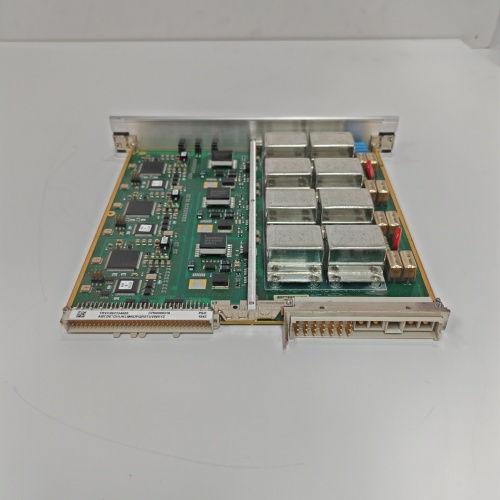
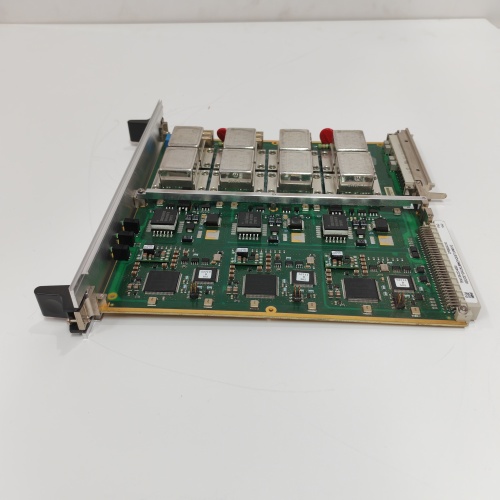
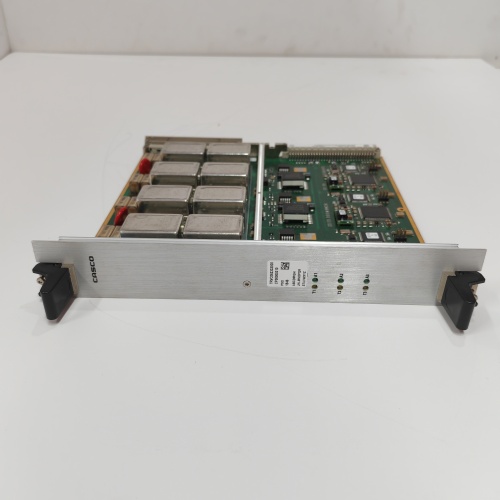
The GE PV2121ED160012CT is the 16‑point digital input module for the Mark VI control system. It takes 24 VDC signals from field devices—limit switches, pressure switches, auxiliary contacts—and feeds them to the main processor. It’s optically isolated, which means it can survive the electrical noise that kills lesser I/O modules. And it has onboard diagnostics: each channel reports back whether it’s actually seeing voltage or not. That’s the feature that saves your weekend when a sensor wire breaks and the plant is down.
I’ve swapped these in gas turbine packages, steam turbine controls, and balance‑of‑plant skids. The Mark VI platform is solid. The I/O packs are field‑replaceable. When one fails, it’s usually a power supply issue on the pack—the 24 V rail inside goes flaky, and you get intermittent inputs. The fix is simple: pull the pack, slide a tested spare in, and verify the channel status LEDs light up.
Key Technical Specifications
| Parameter | Value |
|---|---|
| Channels | 16 digital inputs |
| Input Voltage | 24 VDC nominal (18–30 VDC range) |
| Input Current | 6 mA per channel at 24 VDC |
| Isolation | 1500 VAC optical, channel‑to‑backplane |
| Diagnostics | Per‑channel voltage monitoring, open‑wire detection |
| LED Indicators | Per‑channel status (on/off), pack power OK |
| Operating Temp | –30 to +65 °C |
| Power Supply | 24 VDC from field (looped through) |
| Connection | 50‑pin ribbon cable to terminal board |
| Form Factor | Mark VI I/O pack (pluggable) |
Quality Inspection Process (SOP Transparency)
Mark VI I/O packs are modular, but they fail in specific ways. We test for those.
- Incoming Verification
This batch came from a GE service center surplus sale. Original GE boxes, factory seals intact. Serial numbers traceable to 2012–2015 production. No third‑party handling. - Visual Inspection
First: the 50‑pin edge connector. Gold fingers should be bright, no scoring. If the pack has been racked multiple times, we can see wear. Next: the plastic housing—no cracks, no heat discoloration. Also check the two captive screws that hold the pack in the rack. Bent screws are a sign of rough handling. - Live Functional Test
We test the PV2121ED160012CT in a Mark VI test rack with a working processor and a terminal board. Procedure:- Power‑up: verify pack power LED solid green
- All 16 channels: apply 24 VDC to each channel, verify channel LED lights, verify status in processor
- Remove voltage: verify LED goes off, processor sees 0
- Open‑wire test: simulate broken wire (no voltage, no current), verify diagnostic flag in processor
- Soak test: run all 16 channels at 24 VDC for 1 hour, monitor for false transitions
- Isolation Check
We hit each input terminal with 500 VDC relative to the pack’s ground. Pass threshold: >20 MΩ. Any channel below that gets rejected. - Final QC & Packaging
Passed packs go back in original anti‑static bags (or fresh bags), then bubble wrap, then a carton with QC sticker showing test date, channel count, and soak test results.
Field Replacement Pitfalls
Mark VI I/O packs are easy to swap. That ease makes people skip the checks that matter.
- Terminal board mismatch.
The PV2121ED160012CT is a 24 VDC input pack. There’s a 48 V version and a 120 VAC version. If you plug this into a terminal board wired for 120 VAC, the pack will light up—briefly. Check the voltage rating on the pack label before you install it. - ❌ Captive screws not tightened.
The pack slides into the rack and locks with two captive screws. If you don’t tighten them, the pack can vibrate loose. In a gas turbine application, vibration is constant. I’ve seen a pack work its way out over six months—intermittent faults that nobody could trace. The fix was tightening the screws. - Firmware mismatch.
There’s no user‑loadable firmware on this pack. But there are hardware revisions. The “CT” suffix is the common one. I’ve seen a “CA” revision swapped in—it worked for basic input functions but didn’t report diagnostics correctly. Match the full part number. - Open‑wire detection needs a pull‑down.
The pack can detect open wires, but only if the field wiring has a pull‑down resistor. If you’re using dry contacts with no external resistor, the pack can’t tell the difference between an open wire and a contact that’s open. The diagnostic flag will always read “no fault.” That’s not a module failure—it’s a design limitation. Use a 10 kΩ resistor from input to ground if you want open‑wire detection. - Ground loops.
The inputs share a common return. If you have multiple 24 V power supplies feeding different groups of inputs, you can create a ground loop that shows up as phantom voltage on unused channels. The pack will see that phantom voltage as a valid input. Use one common 24 V supply for all inputs on this pack. If you can’t, switch to a pack with isolated channels.
Get these five right and you’ll cut rework time by 90%.
New Original vs. Refurbished: Why It Matters
“New Original (New Surplus)” means this GE PV2121ED160012CT was built by GE, never installed, and never repaired. The edge connector has never been mated. The optoisolators are fresh. The internal power supply hasn’t been stressed.
Refurbished Mark VI I/O packs are a gamble for one reason: the optoisolators degrade with age and thermal cycling. A pack that looks fine on the outside can have marginal isolation on one channel. That channel will work for a while, then start passing noise. The noise will look like random inputs to the processor. I’ve chased that ghost. It’s a long day.
What we provide:
- Traceable serial number (matches GE production records)
- 1‑hour soak test report with per‑channel results
- Isolation test results (>20 MΩ per channel)
- Original anti‑static bag (if available) or fresh bag with QC seal
- 12‑month warranty
Pricing context:
Our price sits above the cheapest used listings. It’s also well below what a new pack would cost if GE still made them. You’re paying for verified functionality and the confidence that every channel isolates to spec.
Performance Benchmarks & Test Results
All tests performed on Mark VI test rack, 25 °C ambient.
| Test | Condition | Result |
|---|---|---|
| Input voltage threshold | Rising edge | 15.2 VDC typical |
| Input voltage threshold | Falling edge | 12.8 VDC typical |
| Response time | On‑to‑off | <2 ms |
| Response time | Off‑to‑on | <2 ms |
| Isolation resistance | 500 VDC | >50 MΩ per channel |
| Soak test | 24 VDC, 1 hour | 0 false transitions |
| Power consumption | 24 VDC field supply | 150 mA typical (all channels on) |
| Operating temp range | –20 to +65 °C | Full function |
Thermal performance note:
At 65 °C (common inside a turbine control cabinet in summer), the response time stretches to about 3 ms. Still within spec. The LEDs get dim but remain readable. The biggest issue at high temp is the connectors—the plastic expands, and the pack can become hard to seat. Let it cool for 15 minutes before you try to install it.
One more thing from the field:
The PV2121ED160012CT has a small test point on the front edge. You can put a voltmeter there to measure the internal 5 V rail. If the pack powers up but channels don’t respond, check that test point. Should be 5.0 ±0.25 V. If it’s low, the internal power supply is failing. Swap the pack. I’ve seen that save a troubleshooting day.
PR9670/002-000 PLC
PR9670/001-000
PR9670/000-000 DCS
PR9600/014-000 PLC
PR9600/011-000
PR9376/010-021 PLC
PR9376/010-011 DCS
 Email: sales@plcfcs.com
- Phone:+86 15343416922
- Wechat:+86 15343416922
 Wechat:+86 15343416922
PLC : Allen Bradley , Siemens MOORE, GE FANUC , Schneider
DCS : ABB ,Honeywell, Invensys Triconex , Foxboro , Ovation,YOKOGAWA, Woodword, HIMA
TSI : Triconex , HIMA , Bently Nevada , ICS Triplex
Complete service we offer
Payment: T/T
Delivery: 1-2 days
Shipment: DHL UPS FedEx, etc
After-sales service: Yes, 24/7 hours