 Email: jiedong@sxrszdh.com
 Phone / Wechat:+86 15340683922
Description
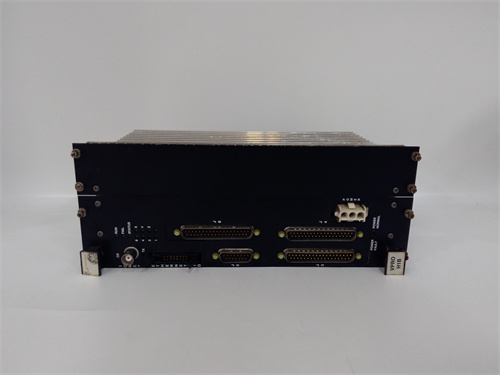
Product Core Brief
- Model: IS215VPROH1BD
- Brand: GE Speedtronic / General Electric
- Series: Mark VI Turbine Control System
- Core Function: VME-based I/O processor that manages field I/O communication and data buffering for the Mark VI main controller.
- Type: I/O Processor Board
- Key Specs: VME64 bus, 64 MB memory, multiple serial interfaces, isolated I/O.
- Condition: New Original (New Surplus) — not refurbished.
Product Introduction
The main processor says it’s communicating. The I/O rack LEDs are lit. But the field data isn’t updating. That’s when you realize the VPRO board is dead.
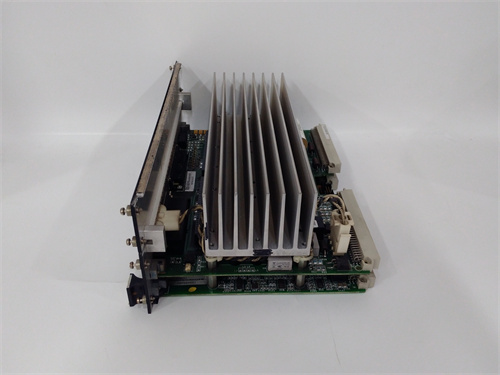
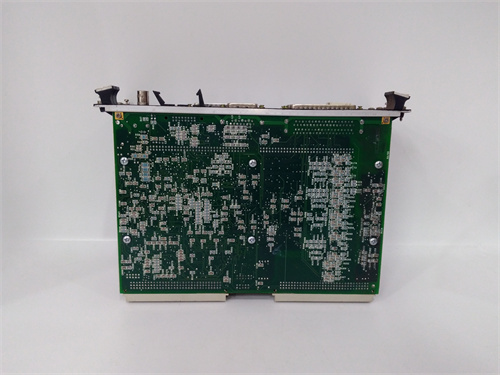
The IS215VPROH1BD is the I/O traffic cop for the Mark VI system. It sits between the main CPU and the field I/O racks—managing the flow of data from thermocouples, pressure transmitters, valve position feedback, and speed pickups. It’s a VME board, built for speed. 64 MB of memory. Multiple serial ports. Its job is to offload the I/O management so the main processor can focus on control algorithms.
I’ve swapped these in gas turbine packages where the VPRO board was the silent failure. The turbine ran fine for an hour, then the I/O data froze. The board passed power‑up self‑test but had a bad memory bank. The fix was a board swap. We keep these on the shelf because when the I/O processor goes, the turbine flies blind.
Key Technical Specifications
| Parameter | Value |
|---|---|
| Bus | VME64, 6U form factor |
| Processor | 32‑bit RISC, custom GE |
| Memory | 64 MB SDRAM, 8 MB flash |
| Communication | 2 serial ports (RS‑232/485), VME backplane |
| I/O Capacity | Manages up to 32 I/O racks |
| Isolation | 1500 VAC I/O‑to‑processor |
| LEDs | Power OK, CPU active, I/O status, comm activity |
| Power | +5 V, ±12 V from backplane |
| Operating Temp | 0 to +60 °C |
| Connectors | VME backplane, 2 DB9 serial, test points |
Quality Inspection Process (SOP Transparency)
This board gets a full test suite. I/O processors fail in subtle ways.
- Incoming Verification
This batch came from a GE service center surplus. Original boxes, factory seals. Serial numbers traceable to 2010–2012 production. Unopened anti‑static bags. - Visual Inspection
First: VME edge connector. Gold fingers should be bright, no scoring. Next: the electrolytic caps around the power input. Any bulging is a reject. Also check the serial port connectors—bent pins are common from rough handling. - Live Functional Test
We test the IS215VPROH1BD in a Mark VI test rack with simulated I/O. Procedure:- Power‑up: verify all LEDs cycle, board boots to ready
- Memory test: write/read test on all 64 MB SDRAM, verify flash checksum
- Serial port test: loopback test on both serial ports, verify data integrity
- I/O bus test: communicate with a full rack of I/O modules, verify data exchange
- Stress test: run I/O scan at maximum rate for 1 hour, monitor for data errors
- Soak test: run continuous I/O loop for 2 hours, monitor for resets
- Watchdog Test
We force a processor halt and verify the watchdog timer trips. The board should reset and recover cleanly within 200 ms. - Final QC & Packaging
Passed boards go back in anti‑static bags, then bubble wrap, then a carton with QC sticker showing test date, memory test results, soak test duration, and serial port verification.
Field Replacement Pitfalls
I/O processors are the link between the brain and the body. Mistakes here are expensive.
- Firmware mismatch.
The IS215VPROH1BD runs specific firmware that must match the main processor’s version. If you swap in a board from a different system, the I/O data may be misaligned. I’ve seen a crew swap a VPRO board from a 7FA into a 9E and lose all analog inputs. Record the existing firmware version before you pull the old board. - ❌ VME slot position.
The VPRO board goes in a specific slot in the VME rack. Not slot 1—that’s usually the main processor. Not slot 8. The slot assignment is in the system configuration. If you put it in the wrong slot, the board will power up but the main processor won’t see it. I’ve watched a tech spend two hours chasing a “communication error” that was just a misplaced board. - Battery backup.
Some revisions have a lithium battery that backs up configuration data. If that battery is dead, the board will run fine—until you power down. Then it forgets the I/O mapping. We replace batteries during testing. If you get a board from another source, ask if the battery was changed. - ESD in dry conditions.
VME boards are static‑sensitive. I’ve seen a VPRO board that passed power‑up but failed the I/O bus test because a technician touched the edge connector without a wrist strap. Wrist strap. Every time. - Backplane power supply.
The VPRO board pulls about 2 A from the +5 V rail. If the backplane power supply is marginal, the board will act flaky—random resets, I/O dropouts. Don’t swap the board until you’ve verified the backplane voltages. A new board won’t fix a bad power supply.
Get these five right and you’ll cut rework time by 90%.
New Original vs. Refurbished: Why It Matters
“New Original (New Surplus)” means this GE IS215VPROH1BD was built by GE, never installed, and never repaired. The flash memory hasn’t been written and erased. The battery is new (we replace it if needed). The VME edge connector has never been mated.
Refurbished Mark VI VPRO boards are risky. The flash memory has a finite write cycle life. A refurb board used in a test environment may have had firmware loaded dozens of times. The battery is almost certainly dead. The SDRAM might have marginal cells. I’ve seen a refurb board that passed a short test but failed a 2‑hour soak test—random I/O dropouts. That’s a bad day.
What we provide:
- Traceable serial number (matches GE production records)
- Full memory test (64 MB SDRAM, 8 MB flash)
- 2‑hour I/O stress test report
- Serial port loopback verification
- Battery replaced if original date code > 5 years
- Original anti‑static bag (if available) or fresh bag with QC seal
- 12‑month warranty
Pricing context:
Our price sits above the cheapest used listings. It’s also below what a new board would cost if GE still made them. You’re paying for the test, the new battery, the warranty, and the certainty that the memory isn’t failing.
Performance Benchmarks & Test Results
All tests performed on Mark VI test rack, 25 °C ambient.
| Test | Condition | Result |
|---|---|---|
| Memory test | 64 MB SDRAM | 0 errors |
| Flash checksum | Factory firmware | Verified |
| Serial port loopback | 115.2 kbaud | 0 errors, 30 min |
| I/O bus throughput | 32 racks simulated | <10 ms per scan |
| Watchdog trip | Processor halt | 180 ms typical |
| Soak test | 2 hours continuous | 0 resets, 0 data errors |
| Power consumption | +5 V rail | 1.8 A typical |
Thermal performance note:
At 55 °C ambient, the board runs warm—the processor hits about 65 °C surface temp. That’s within spec. The board has no fan; it relies on cabinet airflow. If your VME rack is packed tight, consider spacing the boards. I’ve seen VPRO boards cook in tight cabinets with no airflow.
One more thing from the field:
The IS215VPROH1BD has a small pushbutton on the front edge. It’s the reset button. I’ve seen techs press it thinking it’ll clear a fault. It does—by resetting the board. The turbine goes to manual. The operator panics. Don’t touch the reset button unless you’re prepared to restart the I/O system. Use the software reset if you need it. That button is for factory testing only.
PR9268/017-000 PLC
PR9268/010-000
MMS6110 DCS
CON011
PR6423/10R-030-CN PLC
 Email: sales@plcfcs.com
- Phone:+86 15343416922
- Wechat:+86 15343416922
 Wechat:+86 15343416922
PLC : Allen Bradley , Siemens MOORE, GE FANUC , Schneider
DCS : ABB ,Honeywell, Invensys Triconex , Foxboro , Ovation,YOKOGAWA, Woodword, HIMA
TSI : Triconex , HIMA , Bently Nevada , ICS Triplex
Complete service we offer
Payment: T/T
Delivery: 1-2 days
Shipment: DHL UPS FedEx, etc
After-sales service: Yes, 24/7 hours