 Email: jiedong@sxrszdh.com
 Phone / Wechat:+86 15340683922
Description
1. Product Overview
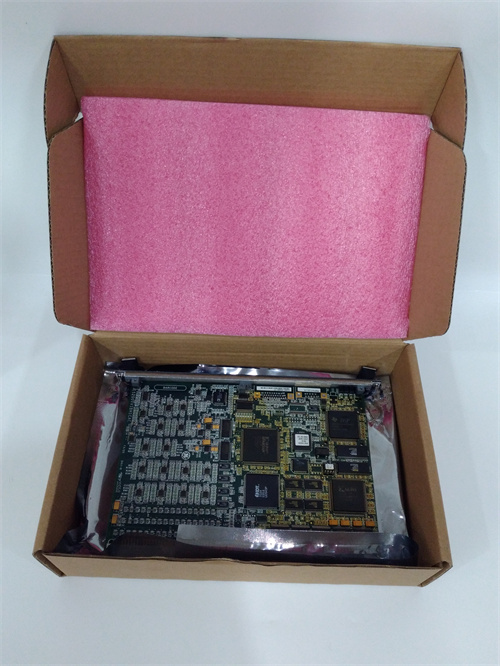
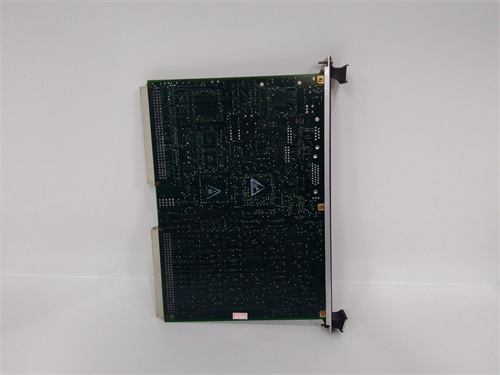
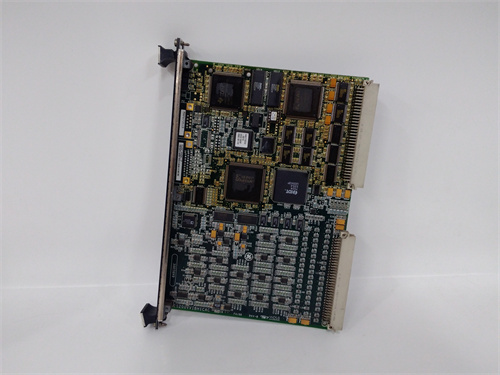
GE IS200VVIBH1C is a high-performance vibration and position monitoring module engineered for GE Mark VIe and Mark VI turbine control systems, specializing in real-time detection of turbine shaft vibration, rotor position, and bearing health to ensure safe, efficient operation of power generation equipment. As a critical component of turbine protection and control architectures, GE IS200VVIBH1C interfaces with eddy current proximity probes, accelerometers, and displacement sensors to capture precise mechanical data, process it via advanced algorithms, and trigger protective actions for abnormal conditions. In a natural gas-fired combined-cycle plant, GE IS200VVIBH1C monitors shaft vibration to prevent rotor damage during startup; in a coal-fired power plant, GE IS200VVIBH1C tracks rotor axial position to avoid thrust bearing failure; in a hydroelectric facility, GE IS200VVIBH1C analyzes bearing vibration for predictive maintenance scheduling. Additionally, GE IS200VVIBH1C integrates seamlessly with turbine control logic and safety systems, making it a foundational element of mission-critical power generation infrastructure.
2. Product Parameters
2.1 Core Monitoring Specifications
- Input Channels: 8 differential channels (configurable for vibration or position)
- Supported Sensors:
- Eddy current proximity probes (3.33 mV/mil, 8 mV/mm) for shaft vibration/position
- Piezoelectric accelerometers (0-100 mV/g) for bearing/casing vibration
- Linear variable differential transformers (LVDTs) for valve position (optional)
- Measurement Ranges:
- Shaft vibration: 0-250 mils (0-6.35 mm) peak-to-peak
- Rotor axial position: 0-500 mils (0-12.7 mm)
- Bearing vibration (acceleration): 0-100 g RMS
- Resolution: 16-bit (all measurement types)
- Sampling Rate: 2048 samples per second (per channel)
- Frequency Response: 0.05 Hz to 20 kHz (flat ±1dB)
2.2 Electrical & System Parameters
- Power Supply: 24V DC (±10%), isolated
- Power Consumption: 3.5W (typical)
- Communication Interfaces: GE Turbine Control Bus (TCB), Modbus TCP/RTU (for remote monitoring)
- Outputs: 8 configurable relay outputs (Form C, 250V AC/30V DC, 5A) for alarms/trips
- Isolation: 3000V AC channel-to-channel, 2500V AC channel-to-ground
- Calibration: Software-calibratable via GE ToolboxST (no manual potentiometers)
2.3 Environmental & Mechanical Parameters
- Operating Temperature: -40°C to +70°C (extended industrial range)
- Storage Temperature: -40°C to +85°C
- Relative Humidity: 5% to 95% (non-condensing), IP20 protection (rack-mounted)
- Vibration Resistance: 5-500Hz, 2g (IEC 60068-2-6, turbine environment compliant)
- Shock Resistance: 50g (11ms half-sine wave, IEC 60068-2-27)
- Form Factor: Mark VIe/Mark VI control rack-mount (3U height)
- Weight: 1.8kg
2.4 Certifications & Compliance
- Industry Certifications: CE, UL/cUL 508, ATEX Zone 2, IECEx, SIL 2 (per IEC 61508)
- Turbine Standards: ISO 10816-3 (rotating machinery vibration), API 612 (steam turbines), API 670 (machinery protection systems)
- EMI/EMC Compliance: EN 55032 (Class A), EN 61000-6-2 (industrial immunity)
3. Advantages & Features
- Dual-Function Monitoring: GE IS200VVIBH1C combines vibration and position monitoring in a single module, eliminating the need for separate hardware and reducing turbine control rack footprint by up to 30%.
- Ultra-High Resolution Data: 16-bit resolution and 2048 Hz sampling rate enable GE IS200VVIBH1C to capture subtle vibration and position changes, detecting incipient faults (e.g., shaft misalignment, bearing wear) months before they cause equipment failure.
- SIL 2 Safety Compliance: GE IS200VVIBH1C meets SIL 2 requirements for machinery protection systems, ensuring compliance with global power generation safety standards and simplifying safety system certification.
- Advanced Diagnostic Tools: Built-in vibration spectrum analysis and trend logging allow operators to diagnose root causes of abnormal conditions, making GE IS200VVIBH1C a key enabler of predictive maintenance programs.
- Seamless Turbine Integration: Native compatibility with Mark VIe/Mark VI systems allows GE IS200VVIBH1C to share real-time data with turbine control logic, enabling closed-loop adjustments (e.g., load reduction) to mitigate vibration issues before trips occur.
4. Application Fields & Cases
4.1 Application Fields
- Combined-Cycle Power Plants: Gas/steam turbine vibration/position monitoring and protection
- Fossil Fuel Power Plants: Steam turbine rotor position control and bearing vibration analysis
- Hydroelectric Facilities: Turbine runner vibration and generator shaft position monitoring
- Industrial Turbomachinery: Compressor, pump, and gas turbine driver protection systems
4.2 Typical Cases
- Combined-Cycle Plant Turbine Protection: A Southeast Asian power plant deployed GE IS200VVIBH1C modules for 12 gas turbines (Mark VIe control systems). The module’s dual vibration/position monitoring detected a rotor axial shift during startup, triggering a protective load reduction and avoiding a $1.5 million turbine repair.
- Coal-Fired Plant Predictive Maintenance: A U.S. coal-fired power plant used GE IS200VVIBH1C to analyze bearing vibration data for 8 steam turbines. Spectrum analysis identified early-stage bearing fatigue in 2 units, allowing scheduled maintenance during a planned outage and reducing unplanned downtime by 25%.
- Hydroelectric Turbine Position Control: A European hydroelectric facility integrated GE IS200VVIBH1C into its turbine control system to monitor rotor axial position and runner vibration. Modbus TCP communication enabled centralized monitoring of 20 turbine units, improving maintenance efficiency and extending turbine lifespan by 10%.
5. Competitive Comparison
| Parameter | GE IS200VVIBH1C | Competitor A (Vibration Module) | Competitor B (Position Monitor) |
|---|---|---|---|
| Channel Count | 8 (vibration/position) | 8 (vibration only) | 4 (position only) |
| Sampling Rate | 2048 Hz | 1024 Hz | 512 Hz |
| Safety Rating | SIL 2 | No SIL rating | SIL 1 |
| Communication | TCB + Modbus TCP/RTU | Modbus RTU only | Proprietary only |
| Frequency Response | 0.05-20 kHz | 0.1-10 kHz | N/A (position only) |
6. Selection Suggestions & Precautions
6.1 Selection Suggestions
- GE Turbine Control Systems: Choose GE IS200VVIBH1C for Mark VIe/Mark VI installations to leverage native integration and simplify safety system certification.
- Dual Vibration/Position Needs: Opt for GE IS200VVIBH1C if your application requires monitoring both turbine vibration and rotor/valve position (e.g., combined-cycle gas turbines, steam turbines).
- SIL Compliance Requirements: Select GE IS200VVIBH1C for power plants needing SIL 2-certified machinery protection to meet global safety regulations.
6.2 Precautions
- Installation Guidelines:
- Mount GE IS200VVIBH1C in a vibration-damped section of the turbine control rack to avoid measurement interference from rack vibration.
- Use twisted-pair shielded cable for sensor connections (minimum 24 AWG) and ground shields at the module end only to prevent ground loops.
- Configuration Notes:
- Calibrate proximity probe linearity via ToolboxST before commissioning—incorrect calibration will lead to inaccurate vibration/position readings.
- Set alarm/trip thresholds based on turbine manufacturer specifications and API 670 guidelines (e.g., 125 mils peak-to-peak for shaft vibration trips).
- Troubleshooting:
- For erratic readings: Check probe-to-target gap (10-20 mils for proximity probes) and verify sensor wiring continuity—faulty wiring is the most common cause of measurement errors.
- For communication faults: Confirm TCB bus termination (120Ω resistor at end nodes) and check Modbus TCP/RTU settings (IP address, baud rate) for remote monitoring.
- Maintenance:
- Replace proximity probe cables every 5 years (per GE recommendations) to prevent insulation degradation in high-temperature turbine environments.
- Back up module configuration to the turbine control system database quarterly—critical for rapid replacement in case of module failure.
 F6220 PLC
F7102 PLC
F7105A PLC
F7126 PLC
F7130 PLC
F7131 PLC
F7133 PLC
F7553 PLC
F8620 PLC
F8620/11 PLC
Brand new✔ In stock ✔ Fast shipping✔
PLC : Allen Bradley , Siemens MOORE, GE FANUC , Schneider
DCS : ABB ,Honeywell, Invensys Triconex , Foxboro , Ovation,YOKOGAWA, Woodword, HIMA
TSI : Triconex , HIMA , Bently Nevada , ICS Triplex
Complete service we offer
Payment: T/T
Delivery: 1-2 days
Shipment: DHL UPS FedEx, etc
After-sales service: Yes, 24/7 hours
 Email: sales@plcfcs.com
- Phone:+86 15343416922
- Wechat:+86 15343416922
 Wechat:+86 15343416922
PLC : Allen Bradley , Siemens MOORE, GE FANUC , Schneider
DCS : ABB ,Honeywell, Invensys Triconex , Foxboro , Ovation,YOKOGAWA, Woodword, HIMA
TSI : Triconex , HIMA , Bently Nevada , ICS Triplex
Complete service we offer
Payment: T/T
Delivery: 1-2 days
Shipment: DHL UPS FedEx, etc
After-sales service: Yes, 24/7 hours