 Email: jiedong@sxrszdh.com
 Phone / Wechat:+86 15340683922
Description
1. Product Overview
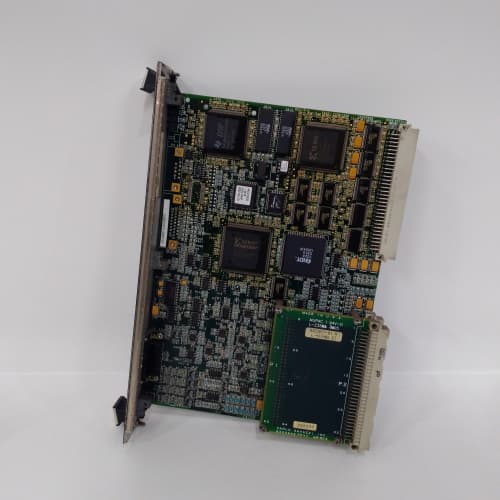
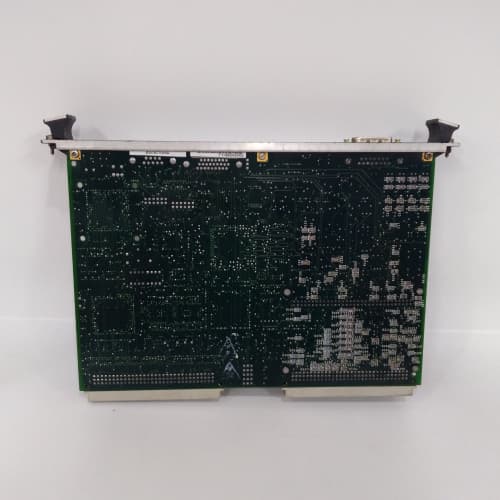
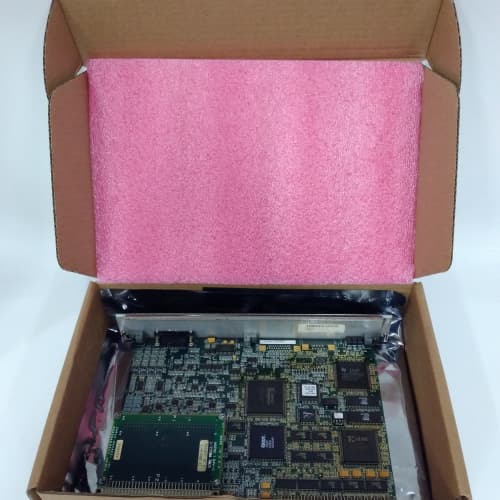
GE IS200VTURH1B is a high-performance turbine vibration monitoring module designed for GE Mark VIe and Mark VI turbine control systems, specializing in real-time detection and analysis of turbine shaft vibration, bearing vibration, and casing vibration to ensure safe and efficient operation. As a core component of turbine protection systems, GE IS200VTURH1B interfaces with proximity probes, accelerometers, and velocity sensors to capture vibration data, process it via built-in algorithms, and trigger alarms or trips for abnormal conditions. In a combined-cycle power plant’s gas turbine, GE IS200VTURH1B monitors shaft vibration to prevent catastrophic failures; in a steam turbine facility, GE IS200VTURH1B tracks bearing vibration for predictive maintenance; in a hydroelectric turbine system, GE IS200VTURH1B analyzes casing vibration to optimize performance. Additionally, GE IS200VTURH1B features high-resolution data acquisition and seamless integration with turbine control logic, making it indispensable for mission-critical power generation infrastructure.
2. Product Parameters
2.1 Core Vibration Monitoring Specifications
- Input Channels: 4 differential vibration input channels
- Supported Sensors:
- Proximity probes (3.33mV/mil, 8mV/mm) for shaft vibration
- Accelerometers (0-100 mV/g) for bearing/casing vibration
- Velocity sensors (0-500 mV/(in/s)) for structural vibration
- Measurement Range:
- Shaft vibration: 0-200 mils (0-5.08 mm) peak-to-peak
- Acceleration: 0-50 g (RMS)
- Velocity: 0-50 in/s (0-1270 mm/s) peak
- Resolution: 16-bit (all measurement types)
- Sampling Rate: 1024 samples per second (per channel)
- Frequency Response: 0.1 Hz to 10 kHz (flat ±1dB)
2.2 Electrical & System Parameters
- Power Supply: 24V DC (±10%)
- Power Consumption: 2W (typical)
- Communication Interface: GE Turbine Control Bus (TCB), Modbus RTU (for remote monitoring)
- Alarm/Trip Outputs: 4 configurable relay outputs (Form C, 250V AC/30V DC, 5A)
- Isolation: 2500V AC channel-to-channel, 1500V AC channel-to-ground
- Calibration: Software-calibratable via GE ToolboxST
2.3 Environmental & Mechanical Parameters
- Operating Temperature: -20°C to +70°C (industrial grade)
- Storage Temperature: -40°C to +85°C
- Relative Humidity: 5% to 95% (non-condensing), IP20 protection (rack-mounted)
- Vibration Resistance: 5-500Hz, 2g (IEC 60068-2-6, turbine environment compliant)
- Shock Resistance: 30g (11ms half-sine wave, IEC 60068-2-27)
- Form Factor: Mark VIe/Mark VI control rack-mount (2U height)
- Weight: 1.2kg
2.4 Certifications & Compliance
- Industry Certifications: CE, UL/cUL 508, ATEX Zone 2, IECEx
- Turbine Standards Compliance: ISO 10816 (mechanical vibration of machines), API 612 (steam turbines), API 617 (centrifugal compressors)
- EMI/EMC Compliance: EN 55032 (Class A), EN 61000-6-2 (industrial immunity)
3. Advantages & Features
- Multi-Sensor Vibration Monitoring: GE IS200VTURH1B supports proximity probes, accelerometers, and velocity sensors, enabling comprehensive monitoring of turbine shaft, bearing, and casing vibration with a single module—reducing system complexity and cost.
- High-Resolution Data Acquisition: 16-bit resolution and 1024 Hz sampling rate ensure GE IS200VTURH1B captures detailed vibration signatures, allowing for early detection of incipient faults (e.g., bearing wear, shaft misalignment) before they cause downtime.
- Integrated Alarm/Trip Logic: Built-in relay outputs and configurable thresholds enable GE IS200VTURH1B to trigger immediate alarms or emergency turbine trips for dangerous vibration levels, complying with API and ISO safety standards.
- Seamless Turbine Control Integration: GE IS200VTURH1B integrates directly with Mark VIe/Mark VI systems, sharing vibration data with turbine control logic for closed-loop optimization (e.g., load reduction for high vibration) and simplifying SIL verification for safety systems.
- Predictive Maintenance Capabilities: The module’s high-frequency response and vibration signature analysis support predictive maintenance workflows, allowing operators to schedule repairs during planned outages and reduce unplanned downtime by up to 40%.
4. Application Fields & Cases
4.1 Application Fields
- Combined-Cycle Power Plants: Gas/steam turbine vibration monitoring and protection
- Hydroelectric Facilities: Turbine shaft/bearing vibration analysis
- Fossil Fuel Power Plants: Steam turbine and generator vibration control
- Industrial Turbines: Compressor and pump driver turbine vibration monitoring
4.2 Typical Cases
- Combined-Cycle Gas Turbine Protection: A U.S. power plant deployed GE IS200VTURH1B modules to monitor shaft and bearing vibration for 8 gas turbines (Mark VIe control systems). Early fault detection of a misaligned shaft prevented a catastrophic failure, saving $2 million in repair costs and avoiding a 4-week outage.
- Hydroelectric Turbine Predictive Maintenance: A Canadian hydroelectric facility used GE IS200VTURH1B to analyze casing vibration for 12 turbine units. Vibration signature analysis identified bearing wear in 3 units, enabling scheduled maintenance during low-demand periods and increasing turbine availability by 15%.
- Industrial Steam Turbine Control: A European chemical plant integrated GE IS200VTURH1B into its Mark VI turbine control system to monitor vibration for a steam turbine driving a centrifugal compressor. Configurable trip thresholds ensured compliance with API 612 standards, while Modbus RTU communication enabled centralized vibration monitoring across the plant.
5. Competitive Comparison
| Parameter | GE IS200VTURH1B | Competitor A (Turbine Vibration Module) | Competitor B (General Vibration Monitor) |
|---|---|---|---|
| Supported Sensors | Proximity/Accelerometer/Velocity | Accelerometer only | Proximity/Accelerometer |
| Sampling Rate | 1024 Hz | 512 Hz | 256 Hz |
| Turbine System Compatibility | Mark VIe/Mark VI | Third-party systems only | No turbine control integration |
| Alarm/Trip Outputs | 4 relay outputs | 2 relay outputs | 1 relay output |
| Frequency Response | 0.1 Hz to 10 kHz | 1 Hz to 5 kHz | 0.5 Hz to 2 kHz |
6. Selection Suggestions & Precautions
6.1 Selection Suggestions
- GE Turbine Control Systems: Choose GE IS200VTURH1B for Mark VIe/Mark VI turbine control systems—native integration ensures seamless data sharing and simplified safety system certification.
- Comprehensive Vibration Monitoring: Opt for GE IS200VTURH1B if your application requires monitoring of shaft, bearing, and casing vibration (e.g., combined-cycle gas turbines, hydroelectric units).
- Predictive Maintenance Workflows: Select GE IS200VTURH1B for facilities implementing predictive maintenance—high-resolution data and vibration signature analysis enable early fault detection.
6.2 Precautions
- Installation Guidelines:
- Mount GE IS200VTURH1B in a Mark VIe/Mark VI control rack with minimal vibration (远离 turbine-mounted equipment) to avoid measurement interference.
- Use shielded twisted-pair wiring for sensor connections and ground the module per GE turbine control system guidelines to maximize noise immunity.
- Configuration Notes:
- Calibrate sensor inputs via ToolboxST software to match probe/accelerometer specifications (e.g., 3.33mV/mil for Bently Nevada proximity probes).
- Set alarm/trip thresholds based on turbine manufacturer recommendations and API/ISO standards (e.g., 100 mils peak-to-peak for shaft vibration trips).
- Troubleshooting:
- For erratic vibration readings: Check sensor wiring integrity and verify module grounding—replace faulty proximity probes or accelerometers before recalibrating GE IS200VTURH1B.
- For communication faults: Confirm Turbine Control Bus connections and check Modbus RTU settings (baud rate, parity) for remote monitoring.
- Maintenance:
- Recalibrate the module annually using a certified vibration calibrator to maintain measurement accuracy.
- Inspect sensor connections quarterly for corrosion or damage, especially in harsh turbine room environments (high temperature/humidity).
 F3331 PLC
F3332 PLC
F3414 PLC
F6205 PLC
F6214 PLC
F6217 PLC
Brand new✔ In stock ✔ Fast shipping✔
PLC : Allen Bradley , Siemens MOORE, GE FANUC , Schneider
DCS : ABB ,Honeywell, Invensys Triconex , Foxboro , Ovation,YOKOGAWA, Woodword, HIMA
TSI : Triconex , HIMA , Bently Nevada , ICS Triplex
Complete service we offer
Payment: T/T
Delivery: 1-2 days
Shipment: DHL UPS FedEx, etc
After-sales service: Yes, 24/7 hours
 Email: sales@plcfcs.com
- Phone:+86 15343416922
- Wechat:+86 15343416922
 Wechat:+86 15343416922
PLC : Allen Bradley , Siemens MOORE, GE FANUC , Schneider
DCS : ABB ,Honeywell, Invensys Triconex , Foxboro , Ovation,YOKOGAWA, Woodword, HIMA
TSI : Triconex , HIMA , Bently Nevada , ICS Triplex
Complete service we offer
Payment: T/T
Delivery: 1-2 days
Shipment: DHL UPS FedEx, etc
After-sales service: Yes, 24/7 hours