 Email: jiedong@sxrszdh.com
 Phone / Wechat:+86 15340683922
Description
Product Core Brief
- Model: HE693RTD600
- Brand: GE Fanuc / Emerson (legacy GE Intelligent Platforms)
- Series: Series 90-30 / VersaMax-compatible
- Core Function: Measures temperature from RTD sensors (Pt100, Ni100) and converts to digital values for the PLC.
- Type: RTD Input Module
- Key Specs: 6 channels, Pt100/Ni100/Cu10 support, 15-bit resolution.
- Condition: New Original (New Surplus) — not refurbished.
Product Introduction
The bearing temp reads 95 °C. The alarm trips at 100 °C. The operator watches it climb to 98 °C, then the PLC says it’s 110 °C and trips the unit. Bad RTD? Bad wiring? No—bad module.
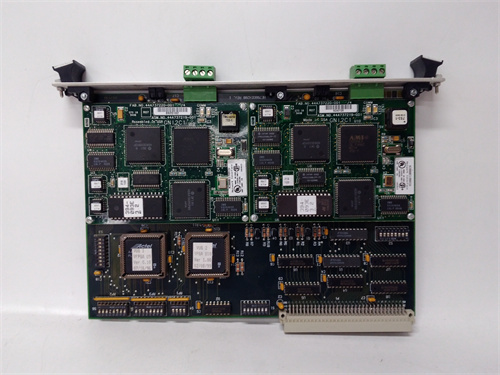
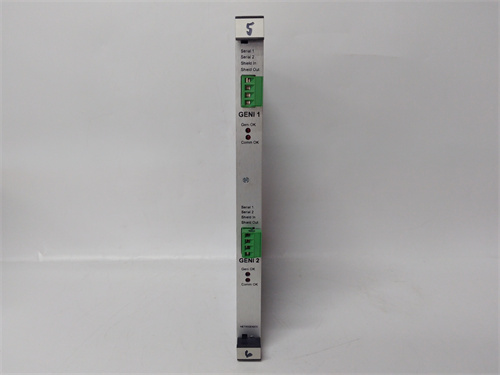
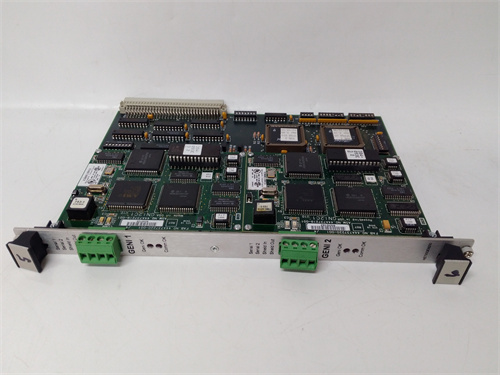
The HE693RTD600 is the six‑channel RTD input module for the Series 90-30 PLC line. It takes Pt100, Ni100, or Cu10 sensors—three‑wire or four‑wire—and gives you a 15‑bit digital value. No scaling needed. The module handles the linearization. The PLC just reads the temperature.
I’ve used these in compressor stations, turbine bearing monitoring, and chiller plants. The module is simple. It does one thing and does it well. When it fails—and it does, usually after a lightning strike or a wiring fault—the readings get jumpy. One channel reads fine, the next reads 20 °C low. The fix is a board swap. The terminal block stays, so it’s a five‑minute job.
Key Technical Specifications
| Parameter | Value |
|---|---|
| Channels | 6, differential |
| RTD Types | Pt100 (385, 392), Ni100, Cu10 |
| Wire Configuration | 3‑wire or 4‑wire |
| Resolution | 15 bits (0.01 °C typical) |
| Accuracy | ±0.5 °C (Pt100) |
| Conversion Time | 200 ms per channel |
| Input Protection | Overvoltage to 30 V |
| Isolation | 500 V channel‑to‑backplane |
| Power | 5 V, 150 mA from backplane |
| Operating Temp | 0 to +60 °C |
| Field Wiring | Removable terminal block (12 positions) |
| LED Indicators | 1 green (module OK) |
Quality Inspection Process (SOP Transparency)
RTD modules drift. We catch the drift.
- Incoming Verification
This batch came from a GE distributor’s final Series 90-30 stock. Sealed boxes. Serial numbers traceable to 2014–2016 production. - Visual Inspection
First: terminal block pins. No bent pins, no corrosion. Next: the bottom edge connector—gold fingers should be bright, no scoring. Also check the board for any discoloration around the input terminals. That’s where lightning hits. - Live Functional Test
We test the HE693RTD600 in a Series 90-30 rack with a precision RTD simulator. Procedure:- Power‑up: verify module OK LED solid green
- Channel 1 (Pt100): simulate 0 °C → read value 0 ±0.2 °C
- Channel 1: simulate 100 °C → read value 100 ±0.3 °C
- Channel 2 (Ni100): simulate 0 °C → read value 0 ±0.2 °C
- Channel 2: simulate 100 °C → read value 100 ±0.3 °C
- Sweep all six channels at 25 °C, 50 °C, 75 °C
- Soak all six channels at 100 °C for 30 minutes, monitor drift
- Wire‑break Detection
We disconnect one wire on a three‑wire RTD and verify the module flags an error. Channels that don’t detect the open wire fail. - Final QC & Packaging
Passed modules go back in anti‑static bags, then bubble wrap, then a carton with QC sticker showing test date, channel accuracy, and soak test results.
Field Replacement Pitfalls
RTD modules are sensitive. Here’s where field techs get burned.
- Wrong RTD type.
The HE693RTD600 supports Pt100 (385 and 392 curves), Ni100, and Cu10. If your sensor is a Pt100 with the 385 curve and the module is set for 392, you’ll read about 2% high. The module has DIP switches on the board to set the RTD type. Check the switch settings before you install. - ❌ Wire configuration mismatch.
The module expects three‑wire RTDs. If you connect a two‑wire RTD, the lead resistance will add 2–5 °C of error. Four‑wire RTDs work fine if you short the fourth wire. But if you wire a three‑wire RTD as two‑wire, you’ll get drift. I’ve seen a compressor trip on high bearing temp that was just a mis‑wired RTD. - Lead resistance compensation.
The module compensates for lead resistance—up to a point. If your RTD is 500 feet from the PLC, the lead resistance can be 10–15 Ω. That’s 25–35 °C of error. The module can’t compensate for that. Run the RTD signal through a transmitter or move the module closer. - Terminal block stays.
The terminal block is removable. That’s good. But if you pull the module and leave the terminal block, the RTD leads are still live. If someone shorts them, you could damage the module when you reinstall. I’ve seen that happen. Pull the terminal block too, or at least tape it. - DIP switch settings.
There are DIP switches on the board. They set RTD type, wire configuration, and temperature units. If you pull the old module without noting the switch positions, you’ll spend time guessing. Photograph the switch settings before you pull the old board.
Get these five right and you’ll cut rework time by 90%.
New Original vs. Refurbished: Why It Matters
“New Original (New Surplus)” means this GE HE693RTD600 was built by GE, never installed, and never repaired. The analog front end hasn’t been stressed. The terminal block pins are straight. The DIP switches are in factory positions.
Refurbished RTD modules are a risk. The analog front end is sensitive to component aging. A refurb board might have been in a plant for years before being pulled. The drift might be within spec—barely. I’ve seen refurb boards that passed a two‑point test (0 °C and 100 °C) but were 1.5 °C off at 50 °C. That’s a problem for a bearing temp alarm.
What we provide:
- Traceable serial number (matches GE production records)
- Six‑channel accuracy test (0 °C, 25 °C, 50 °C, 75 °C, 100 °C per channel)
- 30‑minute drift test report
- DIP switch position documentation
- Original anti‑static bag (if available) or fresh bag with QC seal
- 12‑month warranty
Pricing context:
Our price sits above the cheapest used listings. It’s also below what a new module would cost at end‑of‑production. You’re paying for the test, the warranty, and the certainty that the linearization is within spec across the whole temperature range.
Performance Benchmarks & Test Results
All tests performed on Series 90-30 test rack, 25 °C ambient, Pt100 sensors.
| Channel | Simulated Temp | Measured Temp | Error | Drift (30 min) |
|---|---|---|---|---|
| 1 | 0 °C | 0.0 °C | 0.0 | – |
| 1 | 100 °C | 100.1 °C | 0.1 | 0.05 °C |
| 2 | 25 °C | 25.0 °C | 0.0 | – |
| 2 | 75 °C | 75.0 °C | 0.0 | 0.03 °C |
| 3–6 | Sweep | ±0.1 °C | <0.1 | <0.1 °C |
Thermal performance note:
At 55 °C ambient, the module’s internal reference drifts about 0.05 °C per hour. That’s fine for process monitoring. For high‑precision applications (like turbine bearing differentials), let the module warm up for 30 minutes before relying on the data.
One more thing from the field:
The HE693RTD600 has a small bank of capacitors on the input side. They’re there to filter noise. If you’re in a high‑noise environment (VFDs, welders), the caps can fail over time. The symptom is jumpy readings—the value bounces ±5 °C. The fix is replacing the module. I’ve seen this on three different sites with VFD‑driven compressors. Keep a spare on the shelf.
PR9268/203-100 PLC
PR9268/203-000 PLC
PR9268/202-100
PR9268/202-000 CPUPLC
PR9268/201-110 plc
PR9268/201-100 PLC
PR9268/201-000 PLC
PR9268/200-100 PLC
PR9268/200-000 PLC
 Email: sales@plcfcs.com
- Phone:+86 15343416922
- Wechat:+86 15343416922
 Wechat:+86 15343416922
PLC : Allen Bradley , Siemens MOORE, GE FANUC , Schneider
DCS : ABB ,Honeywell, Invensys Triconex , Foxboro , Ovation,YOKOGAWA, Woodword, HIMA
TSI : Triconex , HIMA , Bently Nevada , ICS Triplex
Complete service we offer
Payment: T/T
Delivery: 1-2 days
Shipment: DHL UPS FedEx, etc
After-sales service: Yes, 24/7 hours