 Email: jiedong@sxrszdh.com
 Phone / Wechat:+86 15340683922
Description
Product Introduction (Anti-Template)
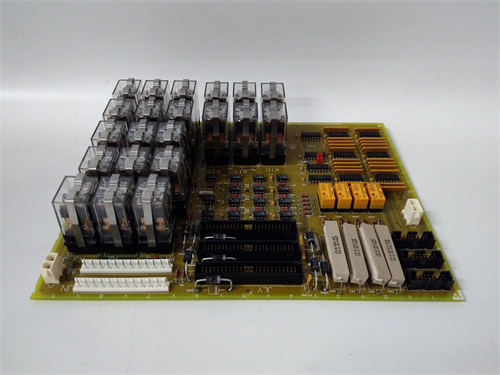
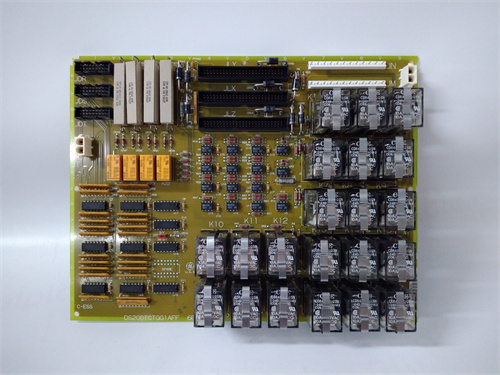
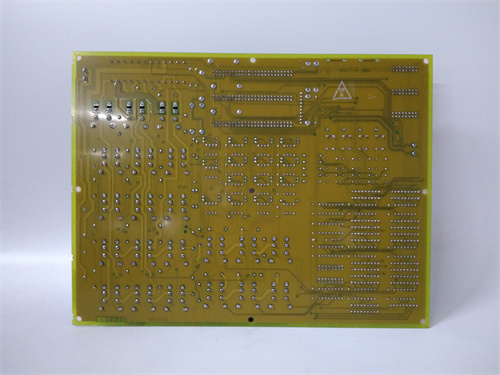
You need accurate exhaust gas or bearing metal temperatures to keep a heavy-duty gas turbine online. That’s the DS200TCTGG1AFF’s only job. It’s a standard thermocouple input board for the GE Mark V Speedtronic system, handling the low-level millivolt signals directly from the field sensors. It’s not a flashy part, but when it drifts or fails, you lose critical temperature monitoring and protective trips.
The board takes 16 separate thermocouple inputs, conditions them, and isolates them from the noisy backplane environment. Its value is in its specificity—it’s built for the Mark V backplane and power supplies, so it drops in without rack modifications. For a plant running a Mark V, having a spare on the shelf (tested, of course) can turn a turbine trip from a three-day outage into a one-hour repair.
Key Technical Specifications
| Parameter | Value |
|---|---|
| Part Number | DS200TCTGG1AFF |
| Product Family | Mark V / DS200 Series |
| Function | Thermocouple Input Board |
| Channels | 16 differential inputs |
| Input Type | Thermocouple (Types J, K, T typically) |
| Isolation | Channel-to-channel and channel-to-backplane isolation |
| Interface | VME backplane connector (P1, P2) |
| Front Panel | Faceplate with mounting screws, no indicators |
| Compatible Systems | GE Speedtronic Mark V |
| Condition | New Surplus |
| Typical Location | Turbine Control Panel, I/O Rack B |
Compatible Replacement Models
Navigating GE Mark V board revisions can be tricky. Here is how the TCTG family stacks up for compatibility.
- ✅ Drop-in Replacement: DS200TCTGG1A (any suffix, e.g., ADC, AFF)
The base model is DS200TCTGG1. Any suffix following the “1” (like AFF, ADC, etc.) indicates a hardware or firmware revision. These are electrically and mechanically identical. You can swap any revision directly without software changes, though verifying the configuration jumpers (if any) is always smart. - ⚠️ Software Compatible: DS200TCTGG2AFF
This is a functionally similar but newer design. It uses the same physical connector and fits in the same slot. However, the register mapping for the software (the application running on the main processor) might differ slightly. You can install it, but expect to verify the data addresses in the Mark V configuration. Budget an hour for a controls engineer to confirm. - ❌ Hardware Incompatible: DS200TCBGG1AFF
This is also a thermocouple board, but for a different rack or application. The P1/P2 backplane pinout is likely different. Do not plug this into a slot expecting a TCTG board; it can short out the 24V backplane power.
Frequently Asked Questions (FAQ)
What causes a DS200TCTGG1AFF board to fail?
In our experience, it’s rarely the thermocouple conditioning chips themselves. We see failures from power supply surges coming in from the backplane (often from a failing power supply) or from voltage being induced on the thermocouple lines during welding or electrical work near the turbine. Physical damage from handling during panel work is also common—bent pins are a killer.
Can I test this board on my bench?
Partially. You can check for proper power-on and communication if you have a Mark V backplane and power supply. But for full validation, you need to simulate millivolt inputs. You can use a precision millivolt source to inject known values and read the digital output via the backplane—though that requires specialized test gear most plants don’t keep. Our testing (SOP) confirms power draw, POST, and basic I/O handshake.
Is this board obsolete?
The Mark V system is considered obsolete by GE, and they no longer manufacture new DS200TCTGG1AFF boards. That’s why the new surplus market is the primary source for genuine spares. If you are planning a major turbine overhaul, you should be looking at a Mark VI or Mark VIe upgrade path. If you just need to keep the current system running, stocking a spare TCTG board is cheap insurance.
How do I handle anti-static precautions with this board?
This board has sensitive CMOS components. Never handle it by the gold fingers or the component side. Use a grounded wrist strap connected to the panel or a dedicated ESD ground. If you don’t have a strap, touch the grounded panel frame before touching the board, and handle it only by the edges. We’ve seen entire I/O racks get ghost faults because someone zapped a board during replacement.
My Mark V faults with “T/C Open” on several channels. Is the board bad?
Not necessarily. “Open” faults usually mean the board isn’t seeing a complete circuit. First, check the field wiring at the terminal boards. Vibration can loosen screws. Next, check the cable from the terminal board to the TCTG board. If multiple channels on the same board are open, the issue could be a common power supply leg or a bad cable connection. Only suspect the board itself if single, random channels fail after you’ve verified wiring.
What is the difference between the “AFF” suffix and others?
GE uses these suffixes to track manufacturing batches and minor component changes. For example, a resistor value might shift by 0.1% due to a parts shortage. The “AFF” suffix simply tells you which revision of the manufacturing documentation was used to build that specific board. Functionally, it is identical to a DS200TCTGG1ADC or any other suffix.
5A26434H01 EMERSON DCSPLC
5A26457G01 EMERSON
5A26458G01 EMERSON
EMERSON 5D32123G02
 Email: sales@plcfcs.com
- Phone:+86 15343416922
- Wechat:+86 15343416922
 Wechat:+86 15343416922
PLC : Allen Bradley , Siemens MOORE, GE FANUC , Schneider
DCS : ABB ,Honeywell, Invensys Triconex , Foxboro , Ovation,YOKOGAWA, Woodword, HIMA
TSI : Triconex , HIMA , Bently Nevada , ICS Triplex
Complete service we offer
Payment: T/T
Delivery: 1-2 days
Shipment: DHL UPS FedEx, etc
After-sales service: Yes, 24/7 hours