 Email: jiedong@sxrszdh.com
 Phone / Wechat:+86 15340683922
Description
1. Product Overview
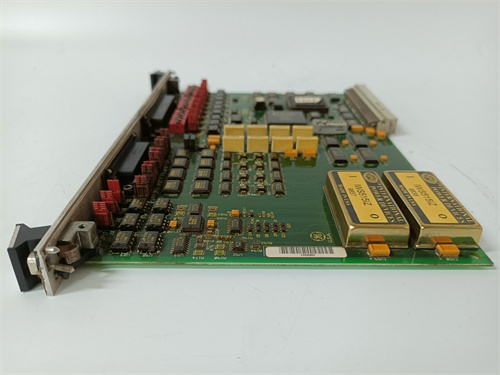
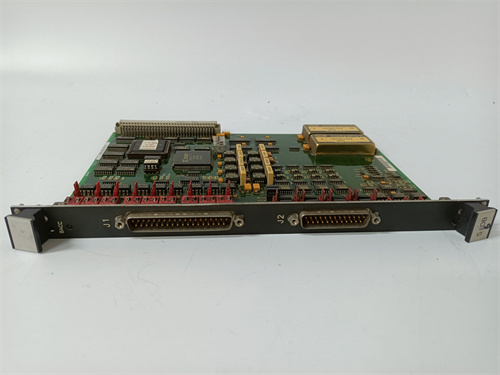
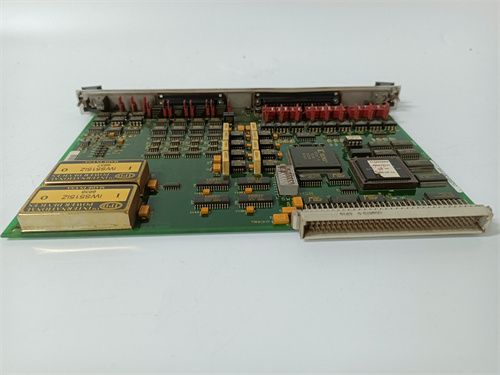
GE DS200SDCCG4A is a high-performance servo drive communication and control board designed for GE’s Mark V and Mark VI turbine control systems, specializing in precise synchronization between servo actuators and the main turbine controller for critical valve and governor control. As a core component of turbine motion control architecture, GE DS200SDCCG4A enables real-time data exchange between servo drives and the controller, supporting closed-loop position, speed, and torque control of hydraulic or electric servo actuators. In a combined-cycle power plant’s gas turbine, GE DS200SDCCG4A coordinates fuel valve servo actuators for precise fuel metering; in a steam turbine facility, GE DS200SDCCG4A controls governor servo motors to maintain grid-compliant speed regulation; in a pipeline compressor turbine, GE DS200SDCCG4A synchronizes inlet guide vane (IGV) servo actuators for anti-surge protection. Additionally, GE DS200SDCCG4A features high-speed communication protocols, redundant data paths, and turbine-grade durability, making it the cornerstone of precise servo control in harsh power generation environments.
2. Product Parameters
2.1 Core Communication & Control Specifications
- Communication Protocols: SERCOS III (100 Mbps), PROFINET IRT (100 Mbps), GE Turbine Control Bus (TCB)
- Servo Control Modes: Position control (±0.01mm accuracy), speed control (±0.1 RPM), torque control (±0.5% of rated)
- Number of Servo Axes: 8 (simultaneous control)
- Update Rate: 1ms (position/speed feedback), 250µs (control command output)
- Feedback Compatibility: Encoder (TTL/HTL, 1Vpp sine wave), resolver (11V/26V), linear variable differential transformer (LVDT)
2.2 Electrical & System Parameters
- Power Supply: 5V DC (logic) + 24V DC (auxiliary), dual redundant inputs
- Power Consumption: 5W (typical, full load)
- Isolation: 2500V AC communication channels to logic; 1500V AC feedback channels to control
- Diagnostic Features: Axis-level fault detection (overtravel, overcurrent, communication loss), real-time servo health monitoring
- Redundancy: 1:1 hot standby for SERCOS III/PROFINET communication paths (automatic switchover <500µs)
2.3 Environmental & Mechanical Parameters
- Operating Temperature: -40°C to +70°C (extended industrial range)
- Storage Temperature: -40°C to +85°C
- Relative Humidity: 5% to 95% (non-condensing)
- Vibration Resistance: 5-500Hz, 5g (IEC 60068-2-6, turbine environment compliant)
- Shock Resistance: 50g (11ms half-sine wave, IEC 60068-2-27)
- Form Factor: Controller chassis-mounted board (Mark V/VI compatible), 170mm × 140mm × 35mm
- Weight: 0.6kg
2.4 Certifications & Compliance
- Industry Certifications: CE, UL/cUL 508, ATEX Zone 2, IECEx
- Safety Ratings: IEC 61508 SIL 2 (for servo control loops)
- Turbine Standards: API 612 (steam turbines), API 670 (machinery protection)
- EMI/EMC Compliance: EN 55032 (Class A), EN 61000-6-2 (industrial immunity)
3. Advantages & Features
- High-Speed Servo Synchronization: 1ms feedback update rate and 250µs command output latency enable GE DS200SDCCG4A to deliver ultra-precise control of turbine servo actuators (e.g., fuel valves, governors), directly improving turbine efficiency and grid frequency compliance.
- Multi-Protocol Communication Flexibility: Support for SERCOS III, PROFINET IRT, and GE TCB allows GE DS200SDCCG4A to integrate with legacy and modern servo drive systems, eliminating the need for protocol converters and reducing system complexity.
- Redundant Data Paths: 1:1 hot standby for communication channels ensures GE DS200SDCCG4A maintains servo control even during a protocol failure, critical for avoiding unplanned turbine shutdowns in mission-critical applications.
- Comprehensive Diagnostics: Axis-level fault detection and real-time health monitoring provide operators with granular visibility into GE DS200SDCCG4A and servo actuator performance, enabling proactive maintenance and reducing downtime for fault resolution.
- Turbine-Grade Durability: -40°C to +70°C operating temperature range, 5g vibration resistance, and rugged construction allow GE DS200SDCCG4A to perform reliably in harsh turbine room conditions, including high humidity, mechanical vibration, and electrical noise.
4. Application Fields & Cases
4.1 Application Fields
- Combined-Cycle Power Plants: Gas turbine fuel valve servo control, steam turbine governor servo motor synchronization
- Fossil Fuel Power Plants: Steam turbine main steam valve (MSV) and reheat steam valve (RSV) servo actuation
- Pipeline Compressors: Turbine inlet guide vane (IGV) and anti-surge valve servo control
- Industrial Turbines: Compressor/pump driver turbine variable geometry turbine (VGT) servo actuation
4.2 Typical Cases
- Gas Turbine Fuel Valve Control (Europe): A German utility deployed GE DS200SDCCG4A in 20 combined-cycle power plant turbine controllers to synchronize 8 fuel valve servo actuators per unit. 1ms feedback latency enabled precise fuel metering, reducing NOx emissions by 20% and improving turbine efficiency by 1.5%.
- Steam Turbine Governor Regulation (USA): A U.S. power plant used GE DS200SDCCG4A to control governor servo motors in Mark VI steam turbines, achieving ±0.1 RPM speed regulation accuracy. This compliance with North American Electric Reliability Corporation (NERC) frequency standards eliminated $150,000 in annual penalty fees.
- Pipeline Compressor IGV Control (Middle East): A Qatar natural gas pipeline operator integrated GE DS200SDCCG4A into compressor turbine control systems to synchronize IGV servo actuators. Redundant communication paths prevented a servo control failure during a SERCOS III link disruption, maintaining compressor operation and avoiding $500,000 in lost pipeline throughput.
5. Competitive Comparison
| Parameter | GE DS200SDCCG4A | Competitor A (Turbine Servo Control Board) | Competitor B (Generic Servo Communication Card) |
|---|---|---|---|
| Update Rate | 1ms | 5ms | 10ms |
| Servo Axes Supported | 8 | 4 | 4 |
| Communication Redundancy | 1:1 Hot Standby | Cold Standby Only | None |
| Operating Temperature | -40°C to +70°C | -20°C to +60°C | 0°C to +50°C |
| Turbine Compatibility | Mark V/VI | Mark VI Only | None |
6. Selection Suggestions & Precautions
6.1 Selection Suggestions
- Precision Servo Control Applications: Choose GE DS200SDCCG4A for fuel valve, governor, or IGV control requiring ±0.01mm position accuracy or ±0.1 RPM speed regulation.
- Mark V/VI Turbine Control Systems: Opt for GE DS200SDCCG4A to leverage native compatibility with GE’s flagship turbine controllers, eliminating protocol converters and reducing integration time.
- Redundant Control Requirements: Select GE DS200SDCCG4A for mission-critical servo loops (e.g., anti-surge valves) needing 1:1 hot standby communication paths to avoid single points of failure.
6.2 Precautions
- Installation Guidelines:
- Install GE DS200SDCCG4A only in compatible Mark V/VI controller chassis; ensure proper alignment with the backplane to avoid communication errors or electrical damage.
- Use shielded twisted-pair cables for SERCOS III/PROFINET communication and route cables away from high-voltage turbine wiring to minimize EMI interference.
- Configuration Notes:
- Calibrate servo feedback devices (encoders/resolvers) via GE Diagnostic Tool before commissioning to ensure ±0.01mm position accuracy; verify control mode settings (position/speed/torque) for each axis.
- Enable redundant communication paths in the controller software and test switchover functionality during commissioning to confirm <500µs failover.
- Troubleshooting:
- For servo control errors: Check feedback device wiring, verify communication link status (LED indicators), and inspect for overtravel/overcurrent faults via diagnostic logs.
- For communication failures: Test redundant path switchover, replace faulty cables/SFP modules, and verify firmware compatibility with servo drives.
- Maintenance:
- Inspect communication cables and connectors quarterly (vibration can cause loosening) and clean contacts with approved electrical contact cleaner.
- Recalibrate servo feedback systems annually to maintain precision control; replace the board every 10 years (per GE’s service life recommendations) to avoid premature failure.
 00-105-903 PLC
00-130-180 KUKA
00-171-602
KSD1-48 KUKA
KSD1-16
KPS600/20-ESC 00-134-525 KUKA
KPS600/20-ESC 00-111-846
KUKA 00-106-290 ESC-CI V1.40 PLC
00-127-755 ESC-CI V1.20 KUKA
00-111-230 PLC
00-108-766 KUKA
Brand new✔ In stock ✔ Fast shipping✔
PLC : Allen Bradley , Siemens MOORE, GE FANUC , Schneider
DCS : ABB ,Honeywell, Invensys Triconex , Foxboro , Ovation,YOKOGAWA, Woodword, HIMA
TSI : Triconex , HIMA , Bently Nevada , ICS Triplex
Complete service we offer
Payment: T/T
Delivery: 1-2 days
Shipment: DHL UPS FedEx, etc
After-sales service: Yes, 24/7 hours
 Email: sales@plcfcs.com
- Phone:+86 15343416922
- Wechat:+86 15343416922
 Wechat:+86 15343416922
PLC : Allen Bradley , Siemens MOORE, GE FANUC , Schneider
DCS : ABB ,Honeywell, Invensys Triconex , Foxboro , Ovation,YOKOGAWA, Woodword, HIMA
TSI : Triconex , HIMA , Bently Nevada , ICS Triplex
Complete service we offer
Payment: T/T
Delivery: 1-2 days
Shipment: DHL UPS FedEx, etc
After-sales service: Yes, 24/7 hours