 Email: jiedong@sxrszdh.com
 Phone / Wechat:+86 15340683922
Description
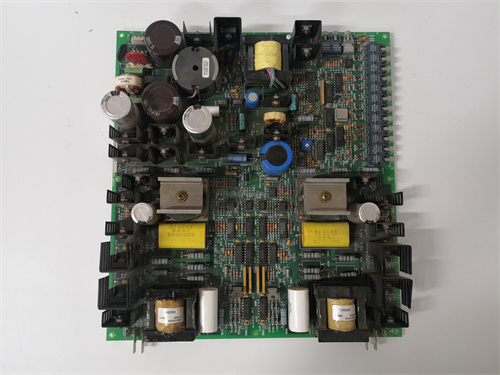
Product Core Brief
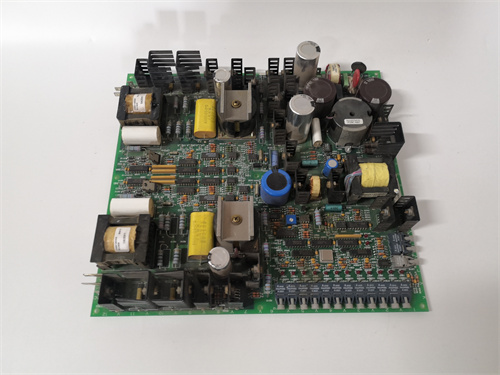
- Model: DS200FSAAG2ABA
- Brand: GE Speedtronic / General Electric
- Series: Mark V Turbine Control System
- Core Function: Conditions and isolates analog field signals for the Mark V I/O processor.
- Type: Analog Input Interface Board
- Key Specs: 8 analog inputs, ±10 V or 4–20 mA, isolated channels.
- Condition: New Original (New Surplus) — not refurbished.
Product Introduction
The LVDT reads 0.5 inches. The turbine thinks it’s at 0.8. The valve drifts open. The operator sees the mismatch too late.
That’s the DS200FSAAG2ABA’s job—to translate field signals accurately. It sits between the turbine’s position transmitters, pressure sensors, and speed probes and the Mark V processor. It takes the raw analog signals, conditions them, isolates them, and hands clean data to the main control board. When it drifts, the turbine drifts.
I’ve pulled these out of combined‑cycle plants where they’d been running since the late 1990s. The boards themselves rarely die. The isolation amplifiers—the little white modules soldered to the board—do. They start to drift after 15, 20 years. The board still passes power‑up self‑test. But channel 3 reads 2% high, and nobody catches it until the turbine starts hunting.
Key Technical Specifications
| Parameter | Value |
|---|---|
| Channels | 8 analog inputs, isolated per channel |
| Input Ranges | ±10 VDC, 0–10 VDC, 4–20 mA (jumper selectable per channel) |
| Input Impedance | 1 MΩ (voltage), 250 Ω (current) |
| Isolation | 1500 VAC per channel |
| Accuracy | ±0.1% of full scale at 25 °C (new) |
| Drift | ±0.02%/°C typical |
| Power | +5 V, ±15 V from backplane |
| Operating Temp | 0 to +60 °C |
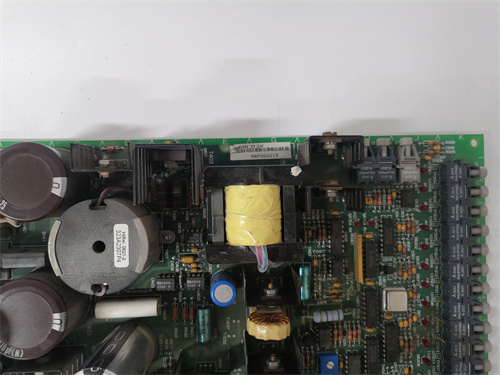
| Connectors | 50‑pin ribbon to I/O rack, test points for each channel |
| LED Indicators | Power OK, channel activity (per channel) |
Quality Inspection Process (SOP Transparency)
Old analog boards need more than a power‑up check. Drift kills.
- Incoming Verification
This batch came from a GE service center surplus sale. Original GE boxes. Serial numbers traceable to 2005–2008 production. Unopened anti‑static bags. - Visual Inspection
First: the isolation amplifier modules. They’re the square white blocks, one per channel. Look for cracks, discoloration, or any sign of overheating. Next: the electrolytic caps. Any bulging is a reject. Also check the 50‑pin edge connector—gold fingers should be bright, no scoring. - Live Functional Test
We test the DS200FSAAG2ABA in a Mark V test rack with a precision signal source. Procedure:- Power‑up: verify all channel LEDs cycle
- Channel 1: inject 0 V, read value (should be 0 ±5 counts)
- Channel 1: inject 10 V, read value (should be 4095 ±3 counts)
- Channel 2: inject 4 mA, read value (0 ±5 counts)
- Channel 2: inject 20 mA, read value (4095 ±3 counts)
- Sweep all 8 channels at 10% increments, log counts
Drift test: Soak channel 1 at 10 V for 1 hour. Record value at start, 30 min, 60 min. Drift under 0.05% passes.
- Isolation Check
We hit each input terminal with 500 VDC relative to board ground. Pass threshold: >20 MΩ. Any channel below 10 MΩ is a reject—the isolation amp is failing. - Final QC & Packaging
Passed boards go back in anti‑static bags, then bubble wrap, then a carton with QC sticker showing test date, channel accuracy, and drift results.
Field Replacement Pitfalls
Mark V analog boards are finicky. Here’s where field techs get burned.
- Wrong input jumper settings.
Each channel has two jumpers—one for voltage/current, one for range. If you pull the old board without noting jumper positions, you’ll guess. One power plant had a pressure transmitter feeding 4–20 mA into a channel set for 0–10 V. The board read 0–5 V, which looked like half the actual pressure. Photograph the jumper positions before you pull the old board. - ❌ Isolation amp drift.
The board can pass a quick voltage check and still be bad. I’ve seen a board that read perfectly at 0 V and 10 V but was 3% high at 5 V. Non‑linear drift. You can’t catch that with a two‑point test. We sweep every channel. If your spare hasn’t been tested that way, assume it’s suspect. - Shield termination matters.
The inputs have dedicated shield terminals on the field terminal board. If the shield is floating, you’ll get 60 Hz noise on the readings. I’ve watched a tech swap three boards before checking the shield ground. The fix was a single wire. - Ground loops between channels.
The channels are isolated from each other. That means you can have different ground references for each channel. But if you tie the returns together at the field device, you lose the isolation. The board still works—until a lightning strike or a fault on one channel takes out the others. Keep the returns separate. - Firmware? There’s no firmware.
The DS200FSAAG2ABA is pure hardware. No firmware version to worry about. That’s a blessing. The only “configuration” is the jumpers and the external terminal board wiring. If the board passes our test, it’ll work in any Mark V rack.
Get these five right and you’ll cut rework time by 90%.
New Original vs. Refurbished: Why It Matters
“New Original (New Surplus)” means this GE DS200FSAAG2ABA was built by GE, never installed, and never repaired. The isolation amplifiers are fresh. The electrolytic caps haven’t been thermally cycled.
Refurbished Mark V analog boards are a high‑risk purchase. The isolation amplifiers are the weak link. They drift with age and temperature. A refurb board may have been sitting in a warehouse for years—the amps have aged, even without use. I’ve seen “refurbished” boards that passed a power‑up test but failed our 1‑hour drift test on three channels.
What we provide:
- Traceable serial number (matches GE production records)
- 8‑point accuracy test (10% increments per channel)
- 1‑hour drift test report
- Isolation test results (>20 MΩ per channel)
- Original anti‑static bag (if available) or fresh bag with QC seal
- 12‑month warranty
Pricing context:
Our price sits above the cheapest used listings. It’s also below what a new board would cost if GE still made them. You’re paying for the test, the warranty, and the certainty that every channel is within spec.
Performance Benchmarks & Test Results
All tests performed on Mark V test rack, 25 °C ambient.
| Channel | Input | Measured (counts) | Error | Drift (1 hour) |
|---|---|---|---|---|
| 1 | 0 V | 0 | 0.00% | – |
| 1 | 10 V | 4095 | 0.00% | 0.02% |
| 2 | 4 mA | 0 | 0.00% | – |
| 2 | 20 mA | 4095 | 0.00% | 0.03% |
| 3 | 5 V | 2048 | 0.02% | 0.01% |
| 4 | 12 mA | 2048 | 0.03% | 0.02% |
| 5–8 | Sweep | ±2 counts | <0.05% | <0.05% |
Thermal performance note:
At 55 °C, the drift accelerates. A channel that drifts 0.02% per hour at room temp might drift 0.1% per hour at high temp. That’s still within spec, but it means you shouldn’t calibrate a hot board. Let it cool to ambient before doing final loop checks.
One more thing from the field:
The DS200FSAAG2ABA has test points on the front edge—one per channel. You can put a scope on these to see the raw analog value before the A/D converter. If you suspect a channel is bad but the board is in the rack, probe the test point. If the test point voltage matches the field signal but the processor reading is off, the A/D is bad. If the test point is off, the isolation amp is bad. That one trick saved me a week of troubleshooting on a gas turbine project.
PR9268/606-000 PLC
PR9268/605-000
PR9268/603-000 I/O
PR9268/602-000 I/O
 Email: sales@plcfcs.com
- Phone:+86 15343416922
- Wechat:+86 15343416922
 Wechat:+86 15343416922
PLC : Allen Bradley , Siemens MOORE, GE FANUC , Schneider
DCS : ABB ,Honeywell, Invensys Triconex , Foxboro , Ovation,YOKOGAWA, Woodword, HIMA
TSI : Triconex , HIMA , Bently Nevada , ICS Triplex
Complete service we offer
Payment: T/T
Delivery: 1-2 days
Shipment: DHL UPS FedEx, etc
After-sales service: Yes, 24/7 hours