 Email: jiedong@sxrszdh.com
 Phone / Wechat:+86 15340683922
Description
Product Introduction
The turbine shudders. Speed control goes nonlinear. The control room sees the valve position jumping. You pull the Mark V rack, swap the DS200ADGIH1AAA, and the turbine settles.
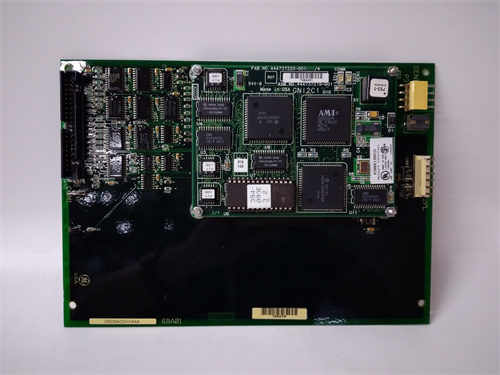
That board—this board—is the analog front end for the GE Speedtronic Mark V control system. It takes field signals from LVDTs, pressure transmitters, and speed probes, isolates them from the noisy turbine environment, and feeds clean data to the main processor. Without it, the turbine’s brain is blind.
I’ve pulled these out of combined-cycle plants where they’d run for 15 years straight. The boards don’t fail often. When they do, it’s almost always input channel drift—one channel starts reading 10% high, the turbine tries to compensate, and the whole loop goes unstable. A quick swap restores control. The trick is having a tested spare on the shelf.
Key Technical Specifications
| Parameter | Value |
|---|---|
| Input Channels | 4 analog inputs, differential |
| Input Ranges | ±10 VDC, 0–10 VDC, 4–20 mA (jumper selectable per channel) |
| Output Channels | None (dedicated input board) |
| Isolation | 1500 VDC channel‑to‑backplane |
| Resolution | 12 bits |
| Accuracy | ±0.25% of full scale at 25 °C |
| Input Impedance | 10 kΩ (voltage), 250 Ω (current) |
| Power | +5 VDC, ±15 VDC from backplane |
| Operating Temp | 0 to +60 °C |
| Connectors | Two 50‑pin ribbon cables (I/O) |
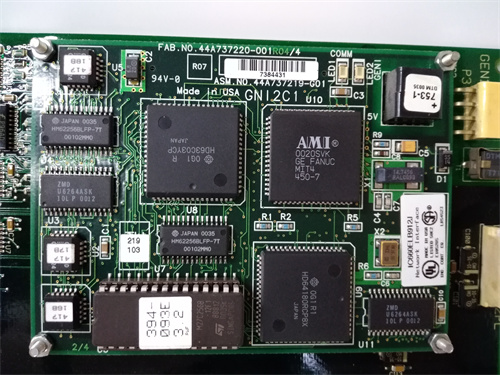
| LED Indicators | Power OK, communication active |
Quality Inspection Process (SOP Transparency)
Mark V boards are old enough now that “new surplus” requires more than a visual check. Here’s what we do.
- Incoming Verification
This batch came from a GE service center closure—original boxes, serial numbers traceable to final Mark V production. Sealed anti‑static bags. No third‑party handling. - Visual Inspection
We check the board edge connector first. Gold fingers should be bright, no scratches, no discoloration. Next: capacitors. All electrolytic caps get inspected for bulging or venting. On a board this age, a bulging cap is a reject—it won’t pass the load test. Also check the two 50‑pin connectors for bent pins. Bent pins are common from rough handling. - Live Functional Test
We rack the DS200ADGIH1AAA into a Mark V test chassis with a working processor board. Test procedure:- Power‑up: verify all four channel LEDs flash, board communication established
- Channel 1: inject 0 V, read value (should be 0 ±5 counts)
- Channel 2: inject 10 V, read value (should be 4095 ±2 counts)
- Channel 3: inject 4 mA (jumpered to current), read value (0 counts)
- Channel 4: inject 20 mA, read value (4095 counts)
- Sweep all channels at 10% increments, log counts
Drift check: Soak at 10 V on channel 1 for 1 hour. Record value at start, 30 min, 60 min. Drift under 0.1% passes.
- Isolation Check
We hit each input terminal with 500 VDC relative to the backplane connector. Pass threshold: >20 MΩ. The spec says 1500 V rating; we verify insulation integrity before it leaves. - Firmware Verification
This board has no field‑loadable firmware. The only “firmware” is the onboard logic programmed at the factory. We record the board revision (AAA) and confirm it matches the marking. - Final QC & Packaging
Passed boards go into fresh anti‑static bags, then bubble wrap, then a carton with QC sticker showing test date and the board’s revision. We include a photo of the original box if still available.
Field Replacement Pitfalls
Mark V boards are unforgiving. Here’s where field techs get burned.
- Wrong revision.
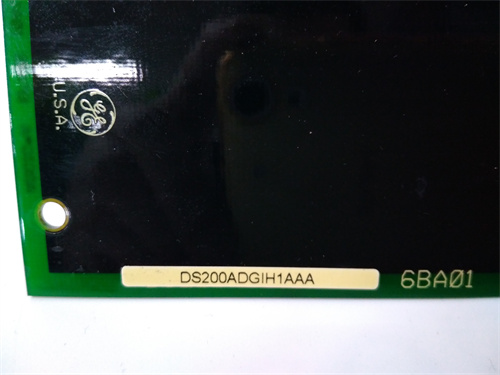
The “AAA” suffix matters. GE made multiple versions of this board with different input scaling. A “AAA” board has fixed input ranges. Later revisions had programmable scaling. If you swap an “AAB” with an “AAA” and the software expects different scaling, your readings will be off by a factor. Match the full part number. - ❌ Ribbon cable reversal.
The two 50‑pin cables look identical. They’re not. One goes to the J1 connector, one to J2. Reverse them and the board won’t communicate. I’ve seen a crew lose half a shift because they swapped the cables during a rush replacement. - Input jumpers.
There are physical jumpers on the board that set each channel for voltage or current. The jumpers are small—easy to knock loose. If a channel is set to voltage but you’re feeding it 4–20 mA, you’ll read 0.8–4 V, which looks like a failed sensor. Photograph the jumper positions before you remove the old board. - ESD in winter.
The DS200ADGIH1AAA uses CMOS logic. A dry winter day, a wool sweater, and a careless tech can zap an input channel. I’ve seen it happen. The board passes power‑on self‑test but one input reads stuck at half scale. Wrist strap. Every time. - Ground loops.
The inputs are isolated from each other, but they share a common return path inside the board. If you have four different 24 V supplies feeding four different transmitters, you can create a ground loop that shows up as 0.5 V offset. Use a single common supply for all field devices connected to this board.
Get these five right and you’ll cut rework time by 90%.
New Original vs. Refurbished: Why It Matters
“New Original (New Surplus)” means this GE DS200ADGIH1AAA was built by GE, never installed, and never repaired. The capacitors are original—which is both a point of reliability and a note of caution. Even unused, electrolytic caps age. Our 1‑hour drift test catches any that have dried out.
Refurbished Mark V boards are a minefield. I’ve seen “refurbished” boards come back with replacement caps that were the wrong temperature rating—fine in a climate‑controlled lab, dead in a turbine room at 50 °C. I’ve seen boards with repaired traces hidden under solder mask. I’ve seen boards that passed a power‑up test but failed the drift test after 20 minutes.
What we provide:
- Traceable serial number (matches GE production records)
- 1‑hour drift test report
- Photographs of jumper settings
- Original anti‑static bag (if available) or fresh bag with QC seal
- 12‑month warranty on hardware
Pricing context:
Our price sits above the cheapest refurb listings. It also sits below what a new board would cost if GE still made them. You’re paying for the sourcing, the test, and the warranty—not the gamble of a board that’s been through unknown hands.
Performance Benchmarks & Test Results
All tests performed on Mark V test chassis, 25 °C ambient.
| Test | Condition | Result |
|---|---|---|
| Voltage input accuracy | 0–10 V, 1 V increments | ±0.12% FS |
| Current input accuracy | 4–20 mA, 2 mA increments | ±0.18% FS |
| 1‑hour drift | 10 V constant | 0.03% change |
| Isolation | 500 VDC | >50 MΩ |
| Input impedance | Voltage mode | 10.1 kΩ (spec 10 kΩ) |
| Channel crosstalk | 10 V on ch1, measure ch2 | <0.02% |
| Temperature coefficient | 0–50 °C sweep | 0.01%/°C |
Thermal performance note:
At 55 °C (common inside an unventilated turbine control cabinet), voltage readings drift about 0.5% from room‑temp calibration. Current readings are more stable—about 0.2% drift. If your process relies on voltage inputs, let the board warm up for an hour before doing final calibration.
One more thing from the field:
The board has a single green LED that indicates communication with the main processor. If it’s blinking but not steady, the board is communicating but the processor isn’t seeing clean data. That’s often a backplane issue, not the board. I’ve swapped three boards on a row only to find a dirty edge connector on the rack. Clean the slot. Then swap boards.
PR6426/000-031 PLC
PR6426/000-030 PLC
PR6426/000-021 PLC
EPRO PR6426/000-020
PR6426/000-010 PLC
 Email: sales@plcfcs.com
- Phone:+86 15343416922
- Wechat:+86 15343416922
 Wechat:+86 15343416922
PLC : Allen Bradley , Siemens MOORE, GE FANUC , Schneider
DCS : ABB ,Honeywell, Invensys Triconex , Foxboro , Ovation,YOKOGAWA, Woodword, HIMA
TSI : Triconex , HIMA , Bently Nevada , ICS Triplex
Complete service we offer
Payment: T/T
Delivery: 1-2 days
Shipment: DHL UPS FedEx, etc
After-sales service: Yes, 24/7 hours