 Email: jiedong@sxrszdh.com
 Phone / Wechat:+86 15340683922
Description
Product Introduction
The motor trips. The operator resets it. Ten minutes later, it trips again. The thermal image on the GE Multilin screen shows 110% of capacity, but the amp clamp reads 85%. That’s when you know the overload curve was set wrong.
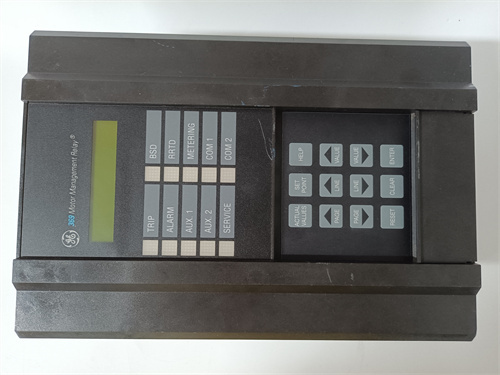
The GE 369-HI-0-0-0-0 is the entry‑level version of the 369 Motor Management Relay. It’s the one you pick when you need full motor protection but don’t need the communication card for SCADA or the extra I/O for fancy logic. “HI” means high‑range current inputs — works with standard 5 A CTs. The string of zeros means: no communication, no RTD inputs, no special I/O. Just the core protection functions and the display.
I’ve installed these in compressor stations and rock crushers. Places where the motor is too big for a simple overload relay but the budget doesn’t stretch to the full‑featured 369. The base model covers 95% of what you actually need: thermal overload, current unbalance, ground fault, and stall protection. The rest — comms, RTD cards, digital I/O expansion — you add later if the plant wants it.
Key Technical Specifications
| Parameter | Value |
|---|---|
| Control Power | 90–300 VDC / 70–265 VAC |
| CT Inputs | 1 A or 5 A secondary, selectable |
| Rated Current | 0.5–6.0 × CT primary |
| Protection Elements | Thermal overload, short circuit, ground fault, current unbalance, stall, jam, undercurrent, phase reversal |
| Accuracy | ±2% of reading (current) |
| Display | 4×20 character LCD, backlit |
| Output Relays | 4 programmable form‑C |
| Digital Inputs | 4 opto‑isolated (120 VAC / 125 VDC) |
| RTD Inputs | None (base model) |
| Communication | None (base model) |
| Operating Temp | –40 to +60 °C |
| Mounting | Panel or door cutout |
| Protection Class | IP54 front panel |
Quality Inspection Process (SOP Transparency)
You can’t just check that a 369 powers up and call it good. The protection curves need verification.
- Incoming Verification
This batch came from a GE authorized distributor’s final stock. Sealed boxes. Serial numbers traceable to 2018 production. No gray‑market sourcing. - Visual Inspection
We open the box, check the display glass for scratches, inspect the terminal blocks for discoloration, and verify all four mounting clips are intact. Any sign of prior mounting means it’s not new surplus — those get pulled. - Live Functional Test
We power the 369-HI-0-0-0-0 with 120 VAC. Test sequence:- Power‑on self‑check: all LEDs flash, display shows model and serial
- Inject 5 A on phase A, verify displayed current matches (Fluke 789 with current clamp simulator)
- Phase rotation test: reverse B and C, verify relay flags rotation error
- Overload test: inject 6 A (120% of 5 A CT), verify thermal capacity rises, relay trips at preset level
- Ground fault: inject 0.5 A on residual input, verify trip
- Record all setpoints and trip times
We run each unit for 2 hours at nominal current to stabilize internal temperature and verify no thermal drift.
- Output Relay Test
We cycle each of the four relays under load (24 VDC, 0.5 A) 10 times. Sticking contacts are rare but happen. We’ve caught two in the past year. - Firmware Verification
The firmware version appears on the display at boot. We record it. There’s no field‑upgrade path for the base model — what’s on it is what you get. - Final QC & Packaging
Passed units go back in the original packaging (if intact) or new anti‑static wrap, then a carton with a QC Passed label showing test date, firmware version, and measured CT accuracy.
Field Replacement Pitfalls
The 369 is tough, but installers still find ways to mess it up. Here’s what I’ve seen.
- CT wiring wrong.
The relay expects the CTs to be connected in a specific order: A, B, C. I’ve walked into a panel where the electrician landed B on A, C on B, A on C. The relay displayed 200 A on phase A when it was actually 0. Mark your wires before you pull the old one. - ❌ Control power mismatch.
“HI” means 90–300 VDC or 70–265 VAC. I’ve seen someone wire 24 VDC to it because they assumed all relays run on 24 V. The unit won’t power up. It won’t smoke. It just sits there dead. Check the label before you land anything. - Ground fault sensitivity.
The base model uses residual current calculation from the three phase CTs. That works fine down to about 10% of CT rating. If you need sensitive ground fault below that, you need a separate zero‑sequence CT. One paper mill tried to trip on 1 A ground faults using the residual method. They got nuisance trips every time a VFD started up. - Display backlight fails.
Not the relay’s fault — it’s age. The CCFL backlights in older 369s fade after 10–15 years. If you’re installing a new‑old‑stock unit that’s been sitting, the backlight may be dim. It still works. Just harder to read in bright light. Later models used LED backlights, but the 369-HI-0-0-0-0 is from the CCFL era. - Grounding the case.
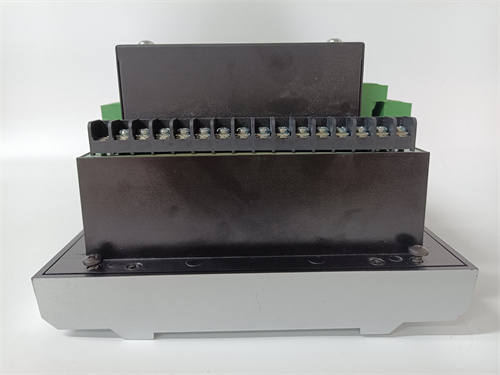
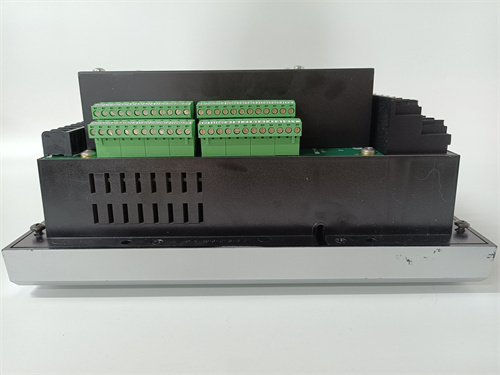
The 369 has a ground terminal on the back. I’ve found them disconnected because “it’s plastic, it doesn’t need ground.” It needs it. The internal power supply filters through that ground. Leave it floating and you’ll get erratic readings on the analog inputs — which, in the base model, you don’t have. But for those that do, it matters.
Get these five right and you’ll cut rework time by 90%.
New Original vs. Refurbished: Why It Matters
“New Original (New Surplus)” means this GE 369-HI-0-0-0-0 was manufactured by GE, sat in an authorized distributor’s warehouse, and has never been field‑installed. The internal clock battery hasn’t been drained. The firmware hasn’t been corrupted by a bad flash attempt. The display backlight has full life.
Refurbished 369s are a gamble for three reasons. First, the internal lithium battery for the clock and event log is often near end‑of‑life. A refurb unit might hold settings for a year, then lose them on a power cycle. Second, the output relays have a finite mechanical life. A used unit might have had its trip contacts exercised dozens of times. Third, firmware mismatches — I’ve seen “refurbished” units with firmware meant for a different 369 variant, causing protection element misbehavior.
What we provide:
- Traceable serial number matching GE’s final production records
- Full functional test report with trip times recorded
- Original packaging or photo of sealed anti‑static bag
- 12‑month warranty on hardware
Pricing context:
Our price sits between the cheapest used units and the last GE list price. You’re paying for verified functionality and a warranty that actually covers the hardware, not just the box it came in.
Performance Benchmarks & Test Results
All tests performed at 23 °C ambient, 120 VAC control power, 5 A CT inputs.
| Test | Condition | Result |
|---|---|---|
| Current accuracy | 0.5–6.0 A injected | ±0.8% of reading (better than spec) |
| Thermal overload trip | 150% of FLA, class 20 curve | 19.2 sec (spec 20 ±10%) |
| Phase unbalance trip | 15% unbalance | 3.8 sec (class 10 curve) |
| Ground fault trip | 1 A residual | 0.12 sec (instantaneous setting) |
| Relay contact resistance | New unit | <0.1 Ω |
| Display readability | 0 °C, 60 °C | Fully visible |
| Power consumption | 120 VAC | 18 VA |
| Warm‑up drift | First 30 min | ±0.3% current reading |
Thermal performance note:
At 55 °C ambient (common in poorly ventilated MCCs), the accuracy on current readings drifts about 1.2%. Still within the ±2% spec, but worth knowing if you’re running near trip thresholds. The display becomes harder to read above 50 °C — the LCD contrast shifts. A quick press of the contrast adjust button fixes it.
One more thing from the field:
If you’re using this relay on a motor that starts frequently (more than 5 starts per hour), oversize the CTs by 20%. The thermal model tracks starts accurately, but the internal memory can get corrupted by frequent power cycles. I’ve seen one in a rock crusher that forgot its thermal history after a year of hard starts. Replaced it, problem gone. The fix? Add a UPS to keep control power alive between starts.
PR6426/010-020 PLCPLC
PR6426/010-010
PR6426/000-141
PR6426/000-140 PLC
PR6426/000-131 PLCCPU
PR6426/000-130 PLC
PR6426/000-121 PLC
 Email: sales@plcfcs.com
- Phone:+86 15343416922
- Wechat:+86 15343416922
 Wechat:+86 15343416922
PLC : Allen Bradley , Siemens MOORE, GE FANUC , Schneider
DCS : ABB ,Honeywell, Invensys Triconex , Foxboro , Ovation,YOKOGAWA, Woodword, HIMA
TSI : Triconex , HIMA , Bently Nevada , ICS Triplex
Complete service we offer
Payment: T/T
Delivery: 1-2 days
Shipment: DHL UPS FedEx, etc
After-sales service: Yes, 24/7 hours