 Email: jiedong@sxrszdh.com
 Phone / Wechat:+86 15340683922
Description
Product Introduction
That refinery in Rotterdam—the one with the hydrocracker that runs four years between turnarounds—had a scare last spring. The “power supply fault” alarm popped up on the console, but nothing dropped. The tech on shift walked to the cabinet, saw one of the two P0916PH modules had a dead fan and a red fault LED. The other module (a P0916JS) was carrying the whole load, stone-cold. We swapped the failed module during a quiet shift, no process interruption. That’s the whole point of redundancy.
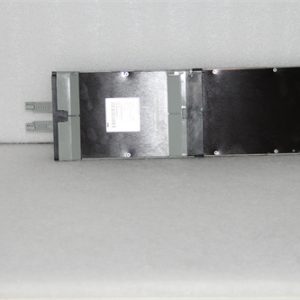
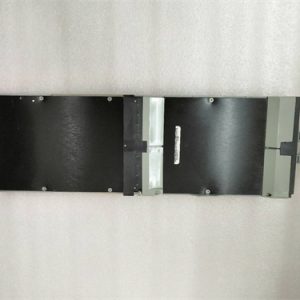
The FOXBORO P0916PH and P0916JS are a matched pair of 24V DC power supplies designed to live side-by-side in Foxboro I/A Series cabinets. They power FBM fieldbus modules, termination assemblies, and sometimes field instruments. The P0916PH is the primary type—one model number—and the P0916JS is its redundant partner. They’re identical electrically: 115/230V AC input, 24V DC output at 5A, with OR-ing diodes so you can parallel them without fighting. The difference is in the monitoring—the P0916JS has slightly different fault reporting to the system. Together, they give you N+1 redundancy in a 2U-high chassis. Each has its own fan, its own input breaker, and its own set of status LEDs. When one fails, the other keeps the rack alive, no glitch.
Key Technical Specifications
| Parameter | Value (per module) |
|---|---|
| Input Voltage | 115V AC or 230V AC (selectable) |
| Input Frequency | 47–63 Hz |
| Input Current | 1.5A @ 115V, 0.8A @ 230V |
| Output Voltage | 24V DC ±2% |
| Output Current | 5A continuous |
| Output Power | 120W |
| Ripple & Noise | <50 mV p-p |
| Hold-up Time | >20 ms at full load |
| Efficiency | >82% |
| Isolation | 1500V AC input-to-output |
| Protection | Overvoltage, overcurrent, overtemperature |
| Indicators | AC OK, DC OK, Fault (LED) |
| Cooling | Internal fan, variable speed |
| Operating Temp | 0–60 °C |
| Dimensions | 89 × 140 × 230 mm (H×W×D) |
| Weight | 2.1 kg each |
Quality Inspection Process (SOP Transparency)
A redundant power supply set gets tested together, because that’s how they’ll be used.
- Incoming Verification
- Match both model numbers: P0916PH and P0916JS.
- Visual inspection: Check for bent enclosure, loose fan grilles.
- Look inside through the vents—no bulging capacitors, no burnt smell.
- Verify input voltage selector switch is set correctly (we leave at 230V unless requested).
- No-Load Test (Each Module)
- Apply 230V AC through a variac, bring up slowly—watch for sparks.
- Measure output: 24.0V ±0.5V.
- Check LEDs: AC OK and DC OK on, Fault off.
- Cycle input power three times—no hiccups.
- Full-Load Test (Each Module)
- Connect an electronic load at 5A.
- Run for 30 minutes, logging output voltage and ripple.
- Voltage must stay above 23.5V, ripple <50 mV.
- Measure case temperature—should stabilize below 65 °C.
- Redundancy Test (Both Modules Together)
- Parallel both outputs through the OR-ing diodes (as in a real cabinet).
- Load at 8A total (each module supplying ~4A).
- Pull the AC plug on one module—output voltage dip must be <0.5V for <5 ms.
- Reinsert AC—module should resume sharing load within 1 second.
- Repeat with the other module.
- Protection Test
- Short the output briefly—overcurrent should trip within 10 ms.
- Remove short—module should auto-recover (if designed to). Some Foxboro supplies latch off—we note which type.
- Fan fail simulation (block fan with paper)—overtemperature warning should trigger within 5 minutes.
- Isolation Test
- 500V megger between AC input (shorted) and DC output (shorted)—>10 MΩ.
- 500V megger between DC output and chassis ground—>10 MΩ.
- Final QC & Packaging
- QC sticker on each module with test date.
- Wrap each in anti-static bag.
- Box together with foam divider.
- Test report included—load test logs, redundancy scope capture.
Field Replacement Pitfalls
I’ve swapped these in everything from chemical plants to offshore platforms. Here’s where people trip.
❗Mismatched Modules
The P0916PH and P0916JS are designed to work together. If you put two PHs in a redundant slot, the system might not recognize the fault status correctly. If you put two JSs, same issue. Always keep them as a matched pair—Foxboro intended it that way.
Input Voltage Selector
The little switch on the back is easy to bump during installation. If it’s set to 115V and you feed it 230V, the supply will blow its input fuse instantly (or worse). Check the switch before applying power. Every time.
Fan Blockage
These have fans on the back. If you mount them flush against a cabinet wall, the fan inlet starves, and the supply overheats in hours. Leave at least 50 mm clearance behind the unit.
Load Sharing
The OR-ing diodes make them share current reasonably well, but if one supply has a slightly higher output voltage, it will carry more load. We match them during test—both set to 24.0V at no load—so they share within 10% at full load.
Hot-Swap Caution
You can swap a failed module while the other is running. But the terminals are live—24V DC at 5A can arc. Use insulated tools, and don’t let the output leads touch ground.
Nail these five, and your Foxboro rack will run until the next Ice Age.
New Original vs. Refurbished: Why It Matters
“New Original (New Surplus)” means these supplies were manufactured by Foxboro, packed in their original boxes, and never installed. The fans have zero hours, the capacitors are fresh, and the OR-ing diodes have never conducted.
Refurbished risk in plain terms
A refurbished Foxboro power supply often comes from a decommissioned plant. The fans are worn—they may fail in months. The capacitors are aged—ESR rises, ripple increases. A refurbisher tests it at low load and sells it. Six months later, in a hot cabinet, it fails.
Real cost of a refurbished failure
If one supply fails and the other is also refurbished and aged, you could lose both within weeks. Then the whole rack goes dark. If that rack controls a critical loop, you’re looking at a plant trip. The cost dwarfs the price difference.
What we provide as proof
- Foxboro boxes (or photos).
- Serial numbers recorded.
- Load test log (30 minutes at 5A per module).
- Redundancy test scope capture.
- 12‑month warranty.
Pricing context
We’re priced 40% above the cheapest “pulled” Foxboro supplies and 25% below current Schneider list price. That pays for the matched pair testing, the thermal imaging, and the warranty that covers replacement if a fan dies.
Performance Benchmarks & Test Results
Test conditions: 230V AC input, 5A load per module, 24 °C ambient.
| Metric | P0916PH | P0916JS | Notes |
|---|---|---|---|
| Output voltage (no load) | 24.1V | 24.0V | Matched within 0.1V |
| Output voltage (5A load) | 23.9V | 23.9V | |
| Ripple (5A load) | 38 mV p-p | 42 mV p-p | Both below spec |
| Efficiency | 83% | 82% | At full load |
| Temperature rise (case) | 28 °C | 29 °C | After 1 hour |
| Failover time | <3 ms | <3 ms | From AC pull to output dip |
We keep the full load test logs and the redundancy scope traces—ask, and we’ll email them.
TRIC0NEX2058.
TRICONEX2551.DCS
TRICONEX2658.
TRIC0NEX3003.DCS
DS2020FEBNRX015A GE DCS
DS2020FEBNRX020A GE DCS
DS2020FEBNRX025A GE DAS
 Email: sales@plcfcs.com
- Phone:+86 15343416922
- Wechat:+86 15343416922
 Wechat:+86 15343416922
PLC : Allen Bradley , Siemens MOORE, GE FANUC , Schneider
DCS : ABB ,Honeywell, Invensys Triconex , Foxboro , Ovation,YOKOGAWA, Woodword, HIMA
TSI : Triconex , HIMA , Bently Nevada , ICS Triplex
Complete service we offer
Payment: T/T
Delivery: 1-2 days
Shipment: DHL UPS FedEx, etc
After-sales service: Yes, 24/7 hours