 Email: jiedong@sxrszdh.com
 Phone / Wechat:+86 15340683922
Description
Product Overview
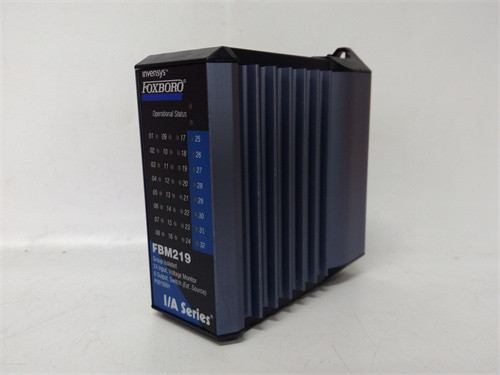
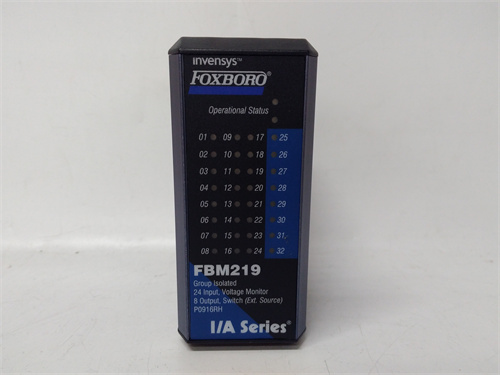
The FOXBORO FBM219 P0916RH is a specialized, high-precision analog input module designed for the Foxboro I/A Series distributed control system (DCS). This Fieldbus Module (FBM) is engineered to interface with high-accuracy RTD (Resistance Temperature Detector) sensors, specifically 4-wire RTDs, which are the standard for critical temperature measurements due to their superior accuracy by eliminating lead wire resistance errors. The primary function of the FOXBORO FBM219 P0916RH is to provide excitation current to the RTD, measure the resultant voltage drop with high resolution, perform signal conditioning and linearization, and communicate the precise temperature value to the I/A Series controllers. For detailed technical data, configuration guides, and wiring diagrams, please refer to the official product resource: FOXBORO FBM219 P0916RH. This module is the go-to choice for applications where temperature measurement integrity is paramount for process safety, quality, or efficiency, such as in reactor control, distillation, and critical equipment monitoring.
Product Parameters and Specifications
- Function: 4-wire RTD Input Module for I/A Series DCS.
- Sensor Type: Specifically designed for Pt100 or Pt1000 RTDs in a 4-wire configuration. The 4-wire method provides the highest accuracy.
- Number of Channels: Typically provides 8 isolated RTD input channels per module.
- Excitation Current: Supplies a stable, precise constant current to the RTD sensor.
- Measurement Method: Utilizes a ratiometric or high-precision measurement technique to calculate resistance (and thus temperature) by measuring the voltage across the RTD while compensating for lead resistance.
- Accuracy: High accuracy specification (e.g., ±0.1°C or better) under defined conditions, suitable for demanding process control.
- Linearization: Performs internal linearization according to the appropriate RTD curve (e.g., IEC 60751).
- Isolation: Provides channel-to-channel and channel-to-system isolation to prevent ground loops and ensure measurement integrity.
- Diagnostics: Includes comprehensive diagnostics for sensor break detection, short-circuit detection, out-of-range values, and module health.
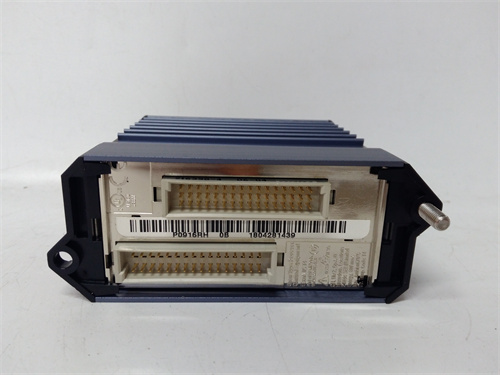
- Connection: Plugs into a compatible Foxboro Plug-in Mounting Module (IPM2 series) which provides the termination points for the four wires per RTD.
Advantages and Key Features
The FOXBORO FBM219 P0916RH offers significant advantages for critical temperature monitoring. Its foremost feature is support for true 4-wire RTD measurement, which provides the highest possible accuracy and stability by inherently compensating for lead wire resistance, a major source of error in 2-wire or 3-wire configurations. The module delivers excellent noise immunity and signal integrity due to its isolated design and high-quality signal conditioning circuitry. It provides individual channel isolation, preventing a fault in one sensor loop from affecting others. The FBM219 supports hot-swappable replacement, allowing maintenance without a process shutdown. It is fully integrated with the I/A Series software, enabling easy configuration of sensor type, range, and alarm limits, as well as advanced diagnostics from the operator workstation. The P0916RH suffix indicates a specific hardware revision with enhanced reliability or features.
Application Cases in Industry
This module is essential in processes where temperature is a key control or safety variable. In Chemical and Petrochemical Reactors, the FBM219 P0916RH provides precise temperature control for exothermic or sensitive reactions. Within Oil & Gas Refining, it monitors critical temperatures in distillation column trays, furnace tube skin temperatures, and catalyst bed temperatures. For Pharmaceutical batch processes, it ensures strict temperature control during sterilization, fermentation, and crystallization. In Power Generation, it is used for precise boiler tube temperature monitoring and feedwater heater control. The FOXBORO FBM219 is also deployed in Food & Beverage pasteurization and sterilization processes where accurate temperature is critical for safety and quality.
Comparison with Competing Products
- vs. Universal Analog Input Modules: A standard 4-20 mA input module requires an external RTD transmitter. The FBM219 integrates this function, offering better overall system accuracy, lower cost per point, and simpler wiring by eliminating the external device.
- vs. Other DCS RTD Input Cards (e.g., Emerson, Honeywell): Competing systems have similar dedicated RTD cards. The FOXBORO FBM219 P0916RH differentiates itself through its deep integration with the I/A Series control strategy and diagnostics, and its specific performance within the 4-wire RTD niche. The physical form factor and hot-swap capability within the Foxboro I/O system are also key factors.
- vs. 2-wire or 3-wire RTD Input Modules: Modules designed for fewer wires are less accurate due to lead resistance effects. The FBM219 is selected when the application demands the highest measurement integrity, justifying the additional wiring.
Selection Suggestions and Precautions
- Selection Advice:
- Sensor Specification Match: Confirm your RTD sensors are Pt100 (or Pt1000) and you are prepared to wire them in a 4-wire configuration. This module is not for thermocouples or 2-wire RTDs.
- Mounting Module Compatibility: The FBM219 must be used with the correct Plug-in Mounting Module (e.g., IPM2-Pxxxx) designed for 8-channel analog inputs with the appropriate terminal block for 4-wire connections.
- Wire Quality and Routing: Use high-quality, matched copper wire for all four leads of each RTD. Route RTD wires separately from power cables to avoid thermal EMF and electrical noise.
- Calibration: For ultimate accuracy, consider calibrating the RTD sensor and the FBM219 input channel together as a system using a precision temperature standard.
- Important Precautions:
- Correct 4-Wire Termination: It is critical to connect the two current leads and two sense leads correctly to the designated terminals on the mounting module. Incorrect wiring will result in significant measurement errors.
- Sensor Placement and Immersion: Ensure the RTD is properly installed with sufficient immersion depth in the process to avoid stem conduction errors, which the module cannot correct.
- Three-Wire RTDs Incompatibility: Do not attempt to connect a 3-wire RTD to this module by tying leads together. It will not provide lead resistance compensation and will yield inaccurate readings. Use a module designed for 3-wire RTDs instead.
- Configuration Verification: Double-check the configuration in the I/A Series software, ensuring the correct RTD type (Pt100), temperature units (°C/°F), and engineering range are set for each channel.
 f6DP1230-8CC SIEMENS
6DP1232-8AA SIEMENS PLC
6DP1280-8AA SIEMENS PLC
6DD1602-0AE0 SIEMENS
 Email: sales@plcfcs.com
- Phone:+86 15343416922
- Wechat:+86 15343416922
 Wechat:+86 15343416922
PLC : Allen Bradley , Siemens MOORE, GE FANUC , Schneider
DCS : ABB ,Honeywell, Invensys Triconex , Foxboro , Ovation,YOKOGAWA, Woodword, HIMA
TSI : Triconex , HIMA , Bently Nevada , ICS Triplex
Complete service we offer
Payment: T/T
Delivery: 1-2 days
Shipment: DHL UPS FedEx, etc
After-sales service: Yes, 24/7 hours