 Email: jiedong@sxrszdh.com
 Phone / Wechat:+86 15340683922
Description
Product Introduction (Anti-Template)
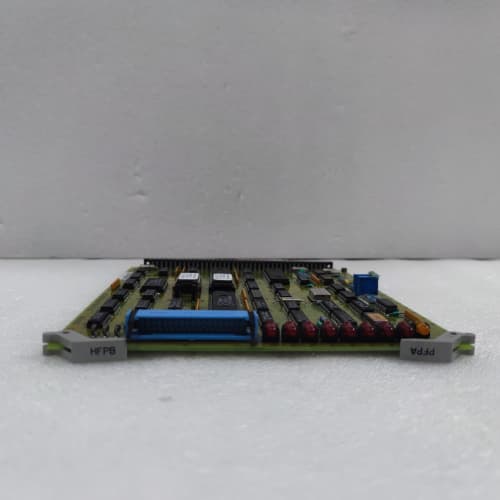
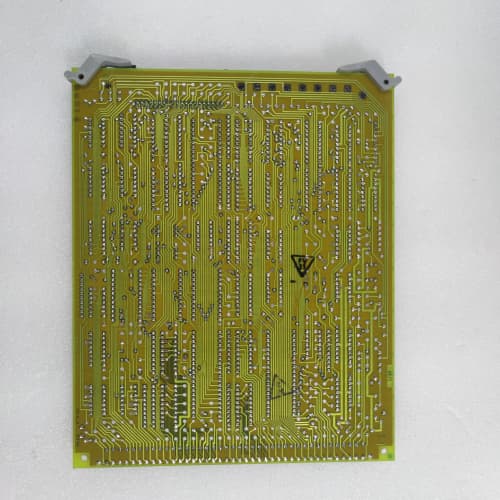
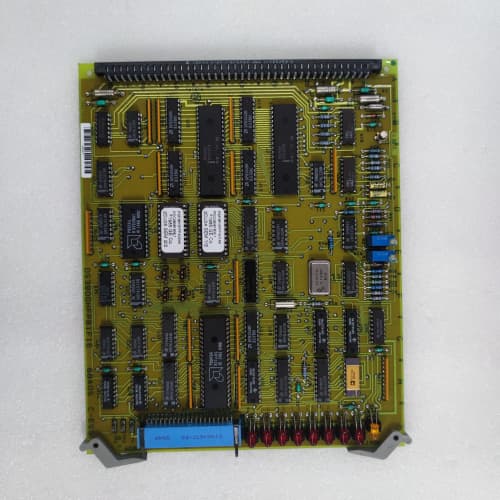
A 24V output board connected to a 48V solenoid is a quick way to let the magic smoke out—and it’s surprisingly easy to do if you’re not paying attention to the voltage rating. The DS3800NRTC is GE’s 48V DC digital output termination board, built for plants with 48V control systems. It’s the high-voltage variant of the standard NRTA, with the same 32-channel output capability, same 0.5A per channel current rating, and same flyback diode protection—but rated for 48V operation.
What you get is a board that safely drives 48V solenoids, relays, and indicators without the need for external interposing relays or voltage converters. The flyback diodes are rated for the higher voltage (clamping spikes up to 100V), and the PCB has increased creepage and clearance to handle the higher voltage safely. A paper mill in the Southeast converted their control system from 24V to 48V to improve solenoid response time, but kept the same Mark VIe rack. They replaced their 24V NRTA boards with NRTC boards—no changes to the I/O modules, just a drop-in replacement with the right voltage rating.
Key Technical Specifications
| Parameter | Value |
|---|---|
| Product Type | Digital output termination board, 48V DC |
| Board Form Factor | Full-height 6U PCB |
| Output Channels | 32 digital output channels |
| Output Voltage | 48V DC nominal |
| Output Current per Channel | 0.5A continuous, 1.0A peak (inductive) |
| Total Board Current | 8A maximum (all channels combined) |
| Output Type | Determined by output module (sourcing/sinking) |
| Protection | Flyback diode per channel (clamps to 80-100V) |
| Short-Circuit Protection | Via I/O module (not on termination board) |
| Voltage Drop | <0.5V at 0.5A per channel |
| LED Indicators | Green (output ON), Off (output OFF) |
| Terminal Block Type | Screw-clamp, accepts 14-22 AWG wire |
| Terminal Block Layout | 2 rows of 16 channels (top/bottom) |
| Connector Type | 50-pin header to digital output module |
| Creepage/Clearance | Enhanced for 48V operation |
| PCB Material | FR-4, standard Tg 135°C |
| PCB Layers | 6-layer |
| Operating Temp | 0°C to +55°C |
| Board Thickness | 1.6mm |
| Weight | 0.7 kg (approx. 1.5 lbs) |
| Mounting | Screws to rack chassis (hardware not included) |
Compatible Replacement Models
| Model | Compatibility | Notes |
|---|---|---|
| DS3800NRTC | ✅ Drop-in Replacement | Exact match. 48V DC variant. Direct swap with no wiring changes. |
| DS3800NRTC-1 | ⚠️ Software Compatible | Older revision with lower current rating (0.2A per channel). Verify your load requirements. Labor: ~2 hours. |
| DS3800NRTA | ⚠️ Hardware Difference | 24V DC version. Not compatible with 48V systems. |
| DS3800NRTB | ⚠️ Hardware Difference | 24V DC version with alternative terminal layout. Not compatible with 48V systems. |
| IS200ERTA (Mark V) | ❌ Hardware Incompatible | Mark V board with different connector pinout. Not compatible. |
| Generic terminal boards | ❌ Hardware Incompatible | Lacks flyback diode protection and proper voltage rating. Not a replacement. |
Frequently Asked Questions (FAQ)
What’s the difference between the NRTC and the NRTA?
Voltage rating. The NRTC is designed for 48V DC field devices; the NRTA is for 24V DC. The NRTC has flyback diodes rated for the higher voltage (clamping to 80-100V), enhanced PCB creepage/clearance, and components rated for the higher voltage. The electrical design is otherwise identical—32 channels, 0.5A per channel, LED status.
Can I use the NRTC on a 24V system?
Yes, you can use a 48V board on a 24V system—it’s overkill, but it works. The components are rated for higher voltage, and the flyback diodes clamp at a higher voltage (80-100V) which is still fine for 24V. The board will perform identically to an NRTA. However, you’re paying for features you don’t need—the NRTC is more expensive than the NRTA. Use the right board for your system.
Can I use the NRTA on a 48V system?
No. The NRTA’s flyback diodes are rated for 24V systems and may fail under 48V. The PCB’s creepage/clearance is also insufficient for 48V. Using an NRTA on a 48V system will eventually damage the board and the output module. This is a common mistake—always match the voltage rating to your system.
What is the total board current limit?
The NRTC has a total board current limit of 8A—that’s the combined current across all 32 channels. At 0.5A per channel, the theoretical maximum is 16A, but the board is limited to 8A total. If your application requires more than 8A, you’ll need a second NRTC board or use external interposing relays.
What’s the flyback diode rating on the NRTC?
The flyback diodes are rated for 80-100V clamping voltage. When a 48V solenoid is de-energized, the voltage spike can reach 200-300V. The diode clamps that spike to about 80V, protecting the output module. The diodes are surface-mount—if one fails (open circuit), the output module will eventually fail. Diodes aren’t field-replaceable; replace the board if you have a failed diode.
How do I know if my system is 24V or 48V?
Check your existing output module or power supply. Most Mark VIe systems use 24V DC outputs, but some plants use 48V. Look at the output module’s label or your plant’s control system documentation. If your field devices are 48V solenoids and relays, you need the NRTC. If they’re 24V, use the NRTA. If you’re unsure, measure the voltage on a field output while it’s ON—it’ll tell you the system voltage.
Can I hot-swap the NRTC while the rack is powered?
No. The board is connected to live field loads. Pulling it while powered could cause arcing on the connector pins and damage the output module. Power down the rack, swap, and power back up. Don’t hot-swap.
What do the LED indicators show?
Green: output ON. Off: output OFF. The LEDs work even if the I/O module is powered down—useful for troubleshooting field wiring.
What’s your test procedure for the NRTC?
Our inbound test:
- Visual: inspect terminal blocks, bent pins, and flyback diodes for discoloration.
- Diode check: each flyback diode must read 0.6V forward, open reverse.
- Current test: apply a 0.5A load to each output—voltage drop under 0.5V.
- Creepage check: verify minimum clearance distances for 48V operation.
- Isolation: 500V DC between adjacent channels—must exceed 10MΩ.
- LED test: verify green LEDs illuminate with 48V DC applied.
We reject about 5% of inbound NRTC boards—mostly for failed flyback diodes or cracked terminal blocks.
What’s the most common field issue with the NRTC?
Using the wrong board voltage. The most common mistake is installing an NRTA in a 48V system—the flyback diodes fail, and the output module gets damaged. Check your system voltage before ordering. The second most common issue is overloading a channel—driving a solenoid that draws more than 0.5A continuous will overheat the diode and eventually fail the board. If your solenoid draws more than 0.5A, use an external interposing relay.
BENTLY 1900/65A-01-01-01-00-00
BENTLY 1900/65A-00-00-02-00-00
BENTLY 1900/65A
 Email: sales@plcfcs.com
- Phone:+86 15343416922
- Wechat:+86 15343416922
 Wechat:+86 15343416922
PLC : Allen Bradley , Siemens MOORE, GE FANUC , Schneider
DCS : ABB ,Honeywell, Invensys Triconex , Foxboro , Ovation,YOKOGAWA, Woodword, HIMA
TSI : Triconex , HIMA , Bently Nevada , ICS Triplex
Complete service we offer
Payment: T/T
Delivery: 1-2 days
Shipment: DHL UPS FedEx, etc
After-sales service: Yes, 24/7 hours