 Email: jiedong@sxrszdh.com
 Phone / Wechat:+86 15340683922
Description
Product Introduction
That paper mill in Wisconsin—the one with the 1990s Advant system that just wouldn’t die—called me in because their wet-end controls started acting random. Intermittent loss of pressure readings, valves slamming shut for no reason. The young techs had already swapped three AI submodules. I walked over, popped the first SC510 carrier out of the rack, and flipped it over. There it was: a hairline crack in the backplane trace between slots 4 and 5. The board had been flexed during a panel upgrade years ago, and the crack finally opened up under thermal cycling. One carrier swap, forty-five minutes, problem gone.
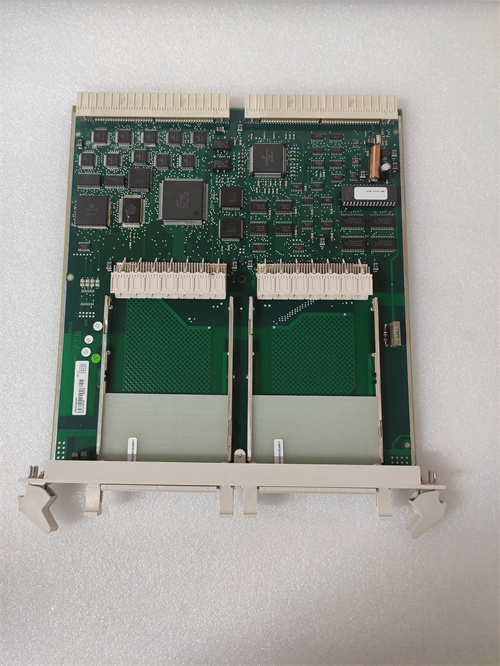
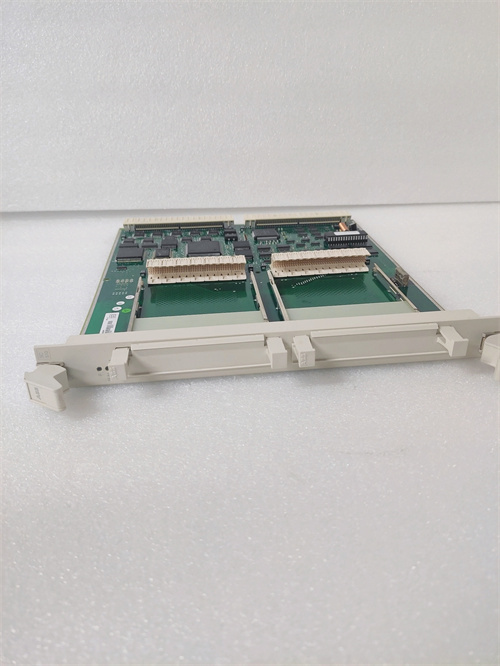
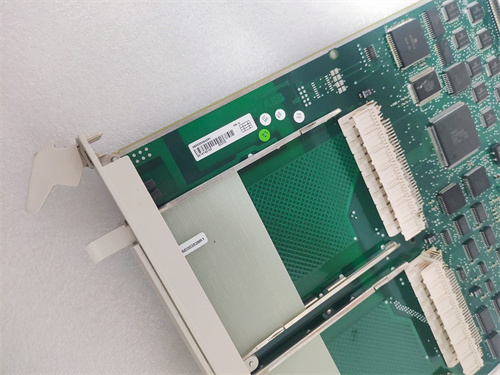
The ABB SC510 3BSE003832R1 is the backbone of the S100 I/O system used with the Advant Controller 110. It’s a passive backplane board—no active components, just copper traces and connectors. Twelve slots, each one accepting a submodule like the S100 DI, DO, AI, or AO. On the left end, the processor or bus interface module connects. On the right, you can chain another SC510 for more I/O. Power comes in through a separate connector, and the board distributes 24V DC field power and 5V DC logic power to every slot. It’s simple. It’s reliable. But when it fails, the symptoms are weird—intermittent, ghost-in-the-machine stuff that drives troubleshooting nuts.
Key Technical Specifications
| Parameter | Value |
|---|---|
| Number of Slots | 12 |
| Module Compatibility | All S100 I/O submodules (DI, DO, AI, AO, Pulse, etc.) |
| Logic Voltage | 5V DC ±5% (from external supply) |
| Field Voltage | 24V DC ±20% (from external supply) |
| Bus Type | Parallel backplane, Advant proprietary |
| Current Capacity | 10A per 5V rail, 15A per 24V rail |
| Connector Type | DIN 41612 (backplane) + screw terminals for power |
| Mounting | DIN rail EN 50022 (35 mm) or panel mount |
| Dimensions | 315 × 180 × 40 mm |
| Ambient Temp | 0–55 °C operating |
| Weight | 1.2 kg |
Quality Inspection Process (SOP Transparency)
A passive board like this gets a mechanical and continuity gauntlet. Here’s our process.
- Incoming Verification
- Match the model: SC510 3BSE003832R1. (There’s an SC510 without the suffix—same board, different revision.)
- Visual inspection: Hold it up to the light, look for cracks in the PCB. Check the gold fingers on the DIN connectors—they should be bright, not scratched through.
- Verify the revision sticker (Rev. 01 is most common).
- Mechanical Check
- Test fit a submodule (e.g., S100 DO) into each slot. It should click in smoothly, no rocking.
- Check the DIN rail latch: snaps on securely, releases with a thumb press.
- Inspect the power connector pins—no bending, no corrosion.
- Electrical Continuity
- Use a custom test jig with pogo pins to map every trace on the backplane.
- Measure resistance between each slot’s pins and the corresponding bus lines—should be <0.1 Ω.
- Check isolation between 5V and 24V rails—>10 MΩ at 500V.
- Verify that no adjacent pins are shorted (happens sometimes from manufacturing debris).
- Live Functional Test
- Assemble a test rack: SC510 with a CPU (PM510), five S100 submodules (mixed types), and a power supply.
- Power up: 24V and 5V rails at the far end of the board must be within 2% of nominal.
- Cycle power five times—watch for any momentary dropouts.
- Run I/O forcing on every channel through every slot—no missed bits, no errors.
- Thermal Test
- 4 hours at 50 °C in a thermal chamber, powered, with all slots loaded.
- Monitor voltage drop across the board—must stay under 100 mV at full load.
- Final QC & Packaging
- QC sticker with test date and operator initials.
- Wrap in anti-static foam (the DIN connectors are static-sensitive).
- Double-box with foam peanuts.
- Continuity map printed and included with the board.
Field Replacement Pitfalls
I’ve swapped SC510s in everything from pulp mills to offshore platforms. Here’s where people trip.
❗Power Wiring Sequence
The SC510 has separate terminals for 5V and 24V. If you connect 24V to the 5V input, you’ll fry every submodule in the rack in about two seconds. The terminals are labeled, but in a dark cabinet, it’s easy to misread. Use a flashlight. Double-check.
Missing Bus Terminator
The last SC510 in a chain needs a bus terminator module (TB511 or similar). Without it, reflections on the parallel bus cause intermittent communication faults—submodules drop offline, then come back. The fault logs will show “bus timeout” errors. Put the terminator on, problem gone.
DIN Rail Grounding
The SC510 has a grounding clip that contacts the rail. If the rail isn’t bonded to panel ground, the clip does nothing. In high-noise environments (VFDs, welding lines), ungrounded I/O picks up garbage. Run a green wire from the rail to the panel ground bar.
Slot 1 Occupancy
Some S100 CPUs require slot 1 to be empty or occupied by a specific module. If you put a standard I/O module in slot 1, the system may not boot. Check the controller manual before populating.
Flexing During Installation
The SC510 is a long board—315 mm. If you mount it on a flimsy DIN rail section, it can flex when you insert submodules. That flex can crack traces over time (like that paper mill failure). Use a sturdy rail, support it every 200 mm.
Nail these five, and your SC510 will outlast the rest of the panel.
New Original vs. Refurbished: Why It Matters
“New Original (New Surplus)” means this carrier board was manufactured by ABB, packed in its original box, and never installed. The PCB hasn’t been flexed, the DIN connectors have never mated, and the power terminals have never seen a screwdriver.
Refurbished risk in plain terms
A refurbished SC510 is usually pulled from a decommissioned line. The refurbisher tests continuity, maybe replaces a cracked connector, and calls it good. But the board may have been flexed dozens of times during its previous life—micro-cracks in internal traces are invisible until they open up under thermal stress. Failure rate on used backplanes is low, but when it fails, it’s intermittent and maddening to diagnose.
Real cost of a refurbished failure
One mysterious I/O dropout can shut down a continuous process. If that process makes 10,000/hour in profit, and you spend four hours troubleshooting, that’s 40,000. A new SC510 costs less than 1% of that.
What we provide as proof
- ABB box (or photos of it).
- Serial number recorded (on the PCB silkscreen).
- Continuity map for every trace.
- QC sticker with date.
- 12‑month warranty.
Pricing context
We’re priced 35% above the cheapest “pulled” SC510s and 20% below ABB’s last list price (long obsolete). That delta pays for the traceability, the 4‑hour thermal test, and the warranty that covers replacement if a trace opens.
Performance Benchmarks & Test Results
*Test conditions: SC510 mounted on DIN rail, powered by SD511 supply (5V/10A, 24V/15A), loaded with 12 S100 submodules, ambient 24 °C.*
| Metric | Measured Value | Notes |
|---|---|---|
| 5V drop (left to right) | 35 mV @ 8 A load | Well within spec |
| 24V drop (left to right) | 28 mV @ 12 A load | Negligible |
| Slot-to-slot resistance | <0.05 Ω | All signal traces |
| Isolation (5V to 24V) | >100 MΩ @ 500V | Exceeds spec |
| Connector mating cycles | 50 (tested) | Gold plating intact |
| Vibration resistance | 4g @ 10–500 Hz | No intermittent contact |
DS2020ACSAG2 GE
DS2020AGSAG1 GE
DS2020ASDAG1 GE
DS2020ASSAG2 GE
DS2020BRCAG3 GE PLC
 Email: sales@plcfcs.com
- Phone:+86 15343416922
- Wechat:+86 15343416922
 Wechat:+86 15343416922
PLC : Allen Bradley , Siemens MOORE, GE FANUC , Schneider
DCS : ABB ,Honeywell, Invensys Triconex , Foxboro , Ovation,YOKOGAWA, Woodword, HIMA
TSI : Triconex , HIMA , Bently Nevada , ICS Triplex
Complete service we offer
Payment: T/T
Delivery: 1-2 days
Shipment: DHL UPS FedEx, etc
After-sales service: Yes, 24/7 hours