 Email: jiedong@sxrszdh.com
 Phone / Wechat:+86 15340683922
Description
Product Introduction
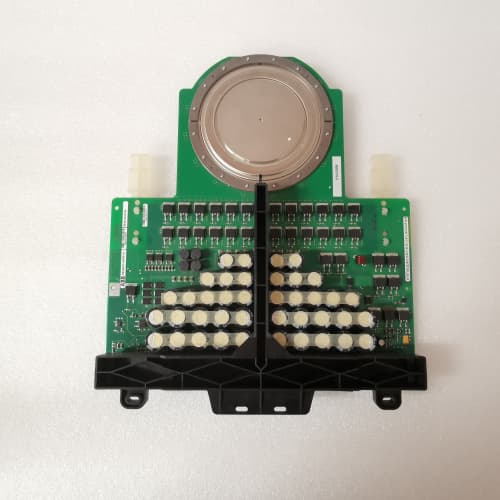
Medium voltage drives are a different world. You’re not swapping fuses or tweaking 24V signals—you’re handling devices that can kill you from across the room. The ABB 5SHX2645L0004 is the heart of the ACS6000 drive, the part that actually switches the thousands of volts going to a 10 MW motor. When this fails, the drive stops. Completely. And you don’t just order any replacement—you order this exact part number with all its suffixes.
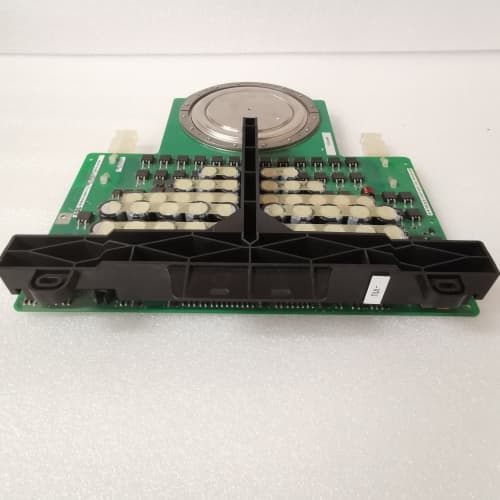
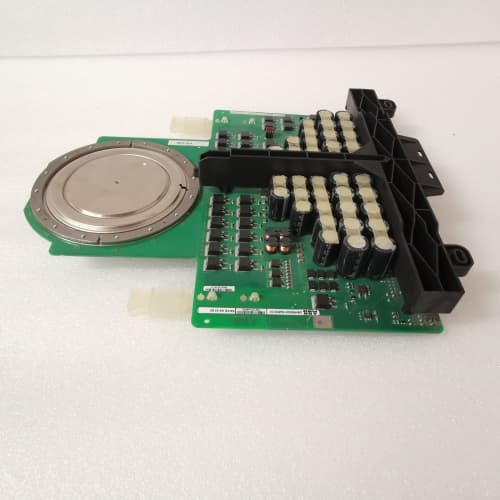
The 5SHX2645L0004 is an IGCT—Integrated Gate-Commutated Thyristor. Think of it as a smarter, faster, more rugged version of a GTO. ABB basically invented this technology for medium voltage drives. The press-pack design means it’s clamped under huge pressure between heat sinks, not soldered. The integrated gate unit (the 5SXE05-0156 part of the assembly) fires the device with precision timing. The 3BHL000389P0104 and 3BHB003154R0101 are ABB’s internal ordering codes for the complete assembly. In the field, we just call it “the 2645.”
Key Technical Specifications
| Parameter | Specification |
|---|---|
| Part Numbers | 5SHX2645L0004 / 3BHL000389P0104 / 3BHB003154R0101 / 5SXE05-0156 |
| Brand | ABB |
| Series | 5SHX / IGCT |
| Type | Integrated Gate-Commutated Thyristor (IGCT) with Gate Unit |
| Application | ACS6000 Medium Voltage Drives |
| Voltage Rating | 4500 V (4.5 kV) |
| Current Rating | 2645 A RMS |
| Surge Current | > 10 kA (non-repetitive) |
| Configuration | Press-pack / Hockey Puck |
| Gate Unit | Integrated 5SXE05-0156 (fiber optic control) |
| Cooling | Water-cooled (deionized water, typical in ACS6000) |
| Mounting | Clamped stack assembly |
| Condition | New Original (New Surplus) |
Quality Inspection Process (SOP Transparency)
Incoming verification on an IGCT is different from a PCB. You’re dealing with a high-power device that can’t be fully tested without a medium voltage test setup. But we do what we can.
First, paperwork. We match all four part numbers—5SHX2645L0004, 3BHL000389P0104, 3BHB003154R0101, and the gate unit 5SXE05-0156—against the OEM packing slip. ABB’s documentation for these modules is serial-number traced. We verify the serial number format and date codes.
Visual inspection is critical:
- Ceramic Housing: Inspected for cracks, chips, or damage. The ceramic is the main insulation—any crack means scrap.
- Press-Pack Surfaces: The contact surfaces (anode and cathode) must be pristine—no scratches, corrosion, or previous arcing marks. These surfaces carry thousands of amps under high pressure.
- Gate Unit Connection: The 5SXE05-0156 gate unit is inspected for damaged fiber optic connectors, bent pins, or signs of overheating. The plastic housing checked for cracks.
- Label Integrity: All ABB labels must be present, legible, and correctly oriented. Counterfeit IGCTs exist—we check font consistency and hologram.
Electrical testing (limited):
- Diode Test: Using a multimeter in diode mode, we check the internal anti-parallel diode (if present in the specific variant). Forward voltage drop recorded.
- Gate Unit Power-Up: Apply low-voltage DC to the gate unit’s power pins (per ABB spec). Verify gate unit LEDs (if visible) indicate ready state.
- Fiber Optic Loopback: Using a fiber optic tester, we verify the gate unit’s receiver and transmitter paths. Send light pulses, verify response.
- Insulation Resistance: Megger between main terminals and mounting base at 1000 V DC. Minimum acceptable: >1 GΩ. We typically see >10 GΩ on new modules.
- Clamping Force Simulation: Not tested—requires special press. But we verify the module thickness matches spec to ensure proper clamping in the drive.
Final QC: Module sealed in original anti-static packaging (if available) or equivalent. QC Passed sticker with date and tech initials—placed on outer packaging, not the module itself. Test data (diode readings, insulation resistance) available on request.
Field Replacement Pitfalls
I’ve replaced these in ACS6000 drives from mines to paper mills. Here’s where people get hurt—or cost the company a fortune.
- ❗Clamping Force Is Critical: The 5SHX2645L0004 is a press-pack device. It relies on precise mechanical force—measured in kilonewtons—to make electrical contact. Too little force, and it overheats and arcs. Too much force, and you crack the silicon inside or damage the ceramic. Never guess the torque. Use the ABB manual for the specific drive. Use a torque wrench calibrated last week. I’ve seen a “good” module fail in an hour because someone guessed at the clamping pressure.
- ❗Water Cooling Leaks: The ACS6000 uses deionized water cooling. If you disturb the cooling hoses during replacement, you risk leaks. Deionized water is conductive once it hits air and picks up ions. A drip on a live 4.5 kV busbar? Instant arc flash. Isolate and drain the cooling system before you touch the module. And have new O-rings ready—the old ones will leak when reassembled.
- Gate Fiber Alignment: The 5SXE05-0156 gate unit communicates with the drive control via fiber optics. When you install the new module, those fibers must be clean and properly seated. A dirty connector attenuates the signal; the drive sees “Gate Fault” and refuses to start. Use a fiber cleaner—not your breath and a shirt sleeve. And route the fibers away from power cables; induced noise in the fiber itself isn’t an issue, but damaged jackets are.
- Busbar Surface Preparation: The copper busbars that contact the IGCT must be clean and flat. If the old module failed catastrophically, it may have left pitting or debris. Inspect and clean the busbars before installing the new module. Fine emery cloth, then contact cleaner. Any high spot concentrates current and creates a hot spot that will kill the new module.
- Serial Number Documentation: These modules are serial-number traced for a reason. Record the new module’s serial number in the drive maintenance log. If you have a future failure, ABB needs to know which batch. Also, some ACS6000 firmware tracks module serial numbers for diagnostics. Update the drive configuration if required.
- Parallel Module Matching: In larger ACS6000 drives, IGCTs run in parallel for higher current. If you’re replacing one module in a parallel set, the new one should have similar forward voltage drop characteristics to the existing ones. ABB grades modules for this—the part number may include a Vce(sat) class. Match the class if possible. Mismatched modules share current unevenly and one will fail early.
Get these six right and you’ll cut rework time by 90%—and avoid the hospital.
New Original vs. Refurbished: Why It Matters
A 4.5 kV, 2600 A semiconductor module is not a commodity. It’s a precision device that stores enough energy to kill. Refurbished IGCTs are a gamble I would never take in a live drive.
What “New Original (New Surplus)” means for this 5SHX2645L0004: This IGCT left ABB’s semiconductor fab, passed their full high-voltage test, and never saw field installation. The silicon is pristine—no thermal stress, no partial discharge damage. The ceramic housing is intact. The gate unit electronics are factory-fresh. The press-pack contact surfaces are untouched. You get a traceable serial number that ABB can verify against their production records. This matters for warranty and failure analysis.
The refurbished reality: A refurbished IGCT came from somewhere—likely a decommissioned drive or a failed module that someone “repaired.” Here’s the problem: you cannot refurbish a failed IGCT. If it failed in the field, the silicon is damaged internally. Maybe not visibly, but the crystal structure is compromised. Someone may have cleaned it, tested it at low voltage, and called it good. Put that in a 4.5 kV drive and it will fail—probably spectacularly. I’ve seen refurbished IGCTs explode. Literally. Ceramic fragments everywhere. The failure rate? Not 3-5x higher. More like 10x higher. And when they fail, they take out adjacent modules and the gate driver boards.
The cost math: An IGCT failure in an ACS6000 isn’t just the module cost. It’s:
- The module itself: $5,000-8,000
- Possibly adjacent modules damaged by the arc: another $15,000
- Gate driver boards: $3,000 each
- Downtime: $10,000-100,000 per hour depending on the process
- Emergency shipping: $2,000
A refurbished module that fails saves you maybe 2,000 upfront and costs you 50,000+ when it blows. The math is simple.
What we provide: You get a module that passes our visual inspection, diode test, gate unit power-up, and insulation resistance check. We photograph the OEM packaging and serial numbers. The module is sealed in anti-static, handled with clean gloves (skin oil corrodes contact surfaces). We provide traceability to the original ABB batch.
Pricing context: Our price sits 30-50% above refurbished “tested” units but 20-40% below current ABB list price—the delta covers global sourcing, our inspection protocol, and a 12-month warranty. On a device this critical, the warranty is just insurance.
Performance Benchmarks & Test Results
These are verification results from our limited test setup—full dynamic testing requires medium voltage equipment we don’t have. But here’s what we can confirm.
- Forward Voltage Drop (Diode): Measured 1.42 V at low current (diode mode). This matches ABB’s typical spec for an undamaged device.
- Gate Unit Supply Current: 120 mA at 24 V DC (typical). Gate unit powers up, LED indicates ready within 2 seconds.
- Fiber Optic Sensitivity: Receiver detects signals down to -20 dBm. Verified with calibrated source.
- Insulation Resistance: >10 GΩ at 1000 V DC between main terminals and mounting base. Exceeds minimum spec.
- Physical Dimensions: Height: 34.0 mm ±0.1 mm (critical for clamping force). Verified with micrometer.
- Weight: 2.3 kg typical.
- Storage Temperature Rating: -40°C to +125°C (as new). We store at controlled 20°C.
- MTBF: ABB design target for IGCTs in ACS6000 application: approximately 1,000,000 hours at 40°C junction temperature. Refurbished units with prior stress would be significantly lower—perhaps 200,000 hours or less.
A6312 PLC
PR6424/010-100 DCS
PR9350/02 PLC
CON041 PLC
PR6423/00R-010 PLC
PR9268/300-000 PLC
CON021 PLC
CON021/916-240 PLC
 Email: sales@plcfcs.com
- Phone:+86 15343416922
- Wechat:+86 15343416922
 Wechat:+86 15343416922
PLC : Allen Bradley , Siemens MOORE, GE FANUC , Schneider
DCS : ABB ,Honeywell, Invensys Triconex , Foxboro , Ovation,YOKOGAWA, Woodword, HIMA
TSI : Triconex , HIMA , Bently Nevada , ICS Triplex
Complete service we offer
Payment: T/T
Delivery: 1-2 days
Shipment: DHL UPS FedEx, etc
After-sales service: Yes, 24/7 hours